PA550773
SNX33 Polyclonal Antibody, Invitrogen™
Manufacturer: Thermo Scientific
Select a Size
| Pack Size | SKU | Availability | Price |
|---|---|---|---|
| Each of 1 | PA550773-Each-of-1 | In Stock | ₹ 46,502.50 |
PA550773 - Each of 1
In Stock
Quantity
1
Base Price: ₹ 46,502.50
GST (18%): ₹ 8,370.45
Total Price: ₹ 54,872.95
Antigen
SNX33
Classification
Polyclonal
Conjugate
Unconjugated
Gene
SNX33
Gene Alias
SH3 and PX domain containing 3; SH3 and PX domain-containing protein 3; SH3PX3; SH3PXD3C; SNX30; SNX33; sorting nexin 33; sorting nexin-33
Host Species
Rabbit
Purification Method
Antigen affinity chromatography
Regulatory Status
RUO
Gene ID (Entrez)
257364
Content And Storage
-20°C
Form
Liquid
Applications
Immunohistochemistry (Paraffin)
Concentration
1.4 mg/mL
Formulation
PBS with 40% glycerol and 0.05% sodium azide; pH 7.4
Gene Accession No.
Q8WV41
Gene Symbols
SNX33
Immunogen
Synthetic peptide corresponding to residues near the C terminal of human sorting nexin 33
Quantity
100 μL
Primary or Secondary
Primary
Target Species
Human
Product Type
Antibody
Isotype
IgG
Related Products

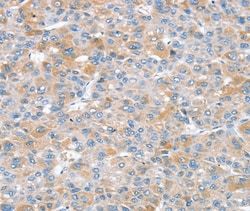


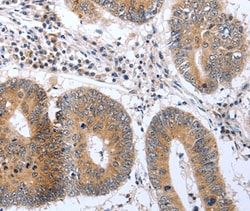
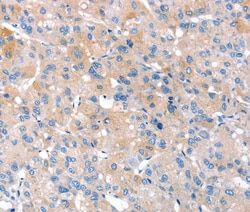
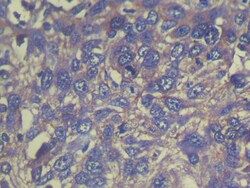
Description
- The antibody detects endogenous levels of total SNX33 protein
- SNX33 (sorting nexin-33), also known as SH3PX3, SH3PXD3C or SNX30, is a 574 amino acid protein that interacts with ADAM15 and FAS-L
- Belonging to the sorting nexin family, SNX33 contains one BAR domain, one PX (phox homology) domain and one SH3 domain
- The gene that encodes SNX33 consists of over 14,000 bases and maps to human chromosome 15q24.2
- Housing approximately 106 million base pairs and encoding more than 700 genes, chromosome 15 makes up about 3% of the human genome
- Angelman and Prader-Willi syndromes are associated with loss of function or deletion of genes in the 15q11-q13 region.