LPP Polyclonal Antibody, Invitrogen™
Manufacturer: Thermo Scientific
Select a Size
| Pack Size | SKU | Availability | Price |
|---|---|---|---|
| Each of 1 | PA550885-Each-of-1 | In Stock | ₹ 46,502.50 |
PA550885 - Each of 1
In Stock
Quantity
1
Base Price: ₹ 46,502.50
GST (18%): ₹ 8,370.45
Total Price: ₹ 54,872.95
Antigen
LPP
Classification
Polyclonal
Conjugate
Unconjugated
Gene
LPP
Gene Alias
9430020K16Rik; AA959454; AU024130; B130055L10Rik; C79715; D630048H16; I79_000864; LIM domain containing preferred translocation partner in lipoma; LIM domain-containing preferred translocation partner in lipoma; LIM protein; lipoma preferred partner; Lipoma-preferred partner; Lipoma-preferred partner homolog; Lipoma-preferred-partner; LPP
Host Species
Rabbit
Purification Method
Antigen affinity chromatography
Regulatory Status
RUO
Gene ID (Entrez)
210126, 288010, 4026
Content And Storage
-20°C
Form
Liquid
Applications
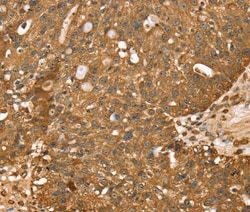
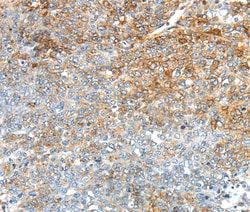
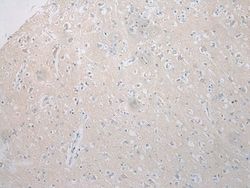
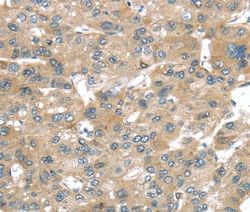
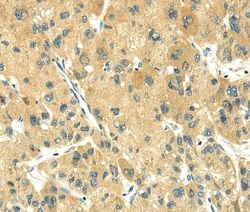
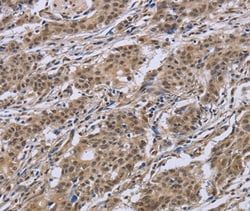
Immunohistochemistry (Paraffin), Western Blot
Concentration
1.9 mg/mL
Formulation
PBS with 40% glycerol and 0.05% sodium azide; pH 7.4
Gene Accession No.
Q5XI07, Q8BFW7, Q93052
Gene Symbols
LPP
Immunogen
Synthetic peptide corresponding to residues near the N terminal of human LIM domain containing preferred translocation partner in lipoma
Quantity
100 μL
Primary or Secondary
Primary
Target Species
Human, Mouse, Rat
Product Type
Antibody
Isotype
IgG
Related Products


Description
- The antibody detects endogenous levels of total LPP protein
- This gene encodes a member of a subfamily of LIM domain proteins that are characterized by an N-terminal proline rich region and three C-terminal LIM domains
- The encoded protein localizes to the cell periphery in focal adhesions and may be involved in cell-cell adhesion and cell motility
- This protein also shuttles through the nucleus and may function as a transcriptional co-activator
- This gene is located at the junction of certain disease related chromosomal translocations which result in the expression of chimeric proteins that may promote tumor growth
- Alternate splicing results in multiple transcript variants.