MRC2 Polyclonal Antibody, Invitrogen™
Manufacturer: Thermo Scientific
Select a Size
| Pack Size | SKU | Availability | Price |
|---|---|---|---|
| Each of 1 | PA550956-Each-of-1 | In Stock | ₹ 46,057.50 |
PA550956 - Each of 1
In Stock
Quantity
1
Base Price: ₹ 46,057.50
GST (18%): ₹ 8,290.35
Total Price: ₹ 54,347.85
Antigen
MRC2
Classification
Polyclonal
Conjugate
Unconjugated
Gene
MRC2
Gene Alias
CD280; CLEC13E; collagen-binding factor Endo180; C-type lectin domain family 13 member E; C-type mannose receptor 2; Endo180; endocytic receptor (macrophage mannose receptor family); endocytic receptor 180; KIAA0709; Lectin lambda; macrophage mannose receptor 2; mannose receptor C type 2; mannose receptor, C type 2; mKIAA0709; Mrc2; novel lectin; UPARAP; UPAR-associated protein; urokinase-type plasminogen activator receptor-associated protein
Host Species
Rabbit
Purification Method
Antigen affinity chromatography
Regulatory Status
RUO
Gene ID (Entrez)
17534, 498011, 9902
Content And Storage
-20° C, Avoid Freeze/Thaw Cycles
Form
Liquid
Applications
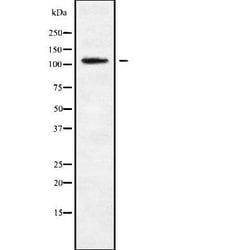
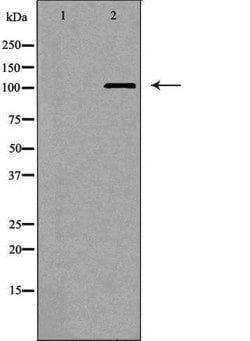
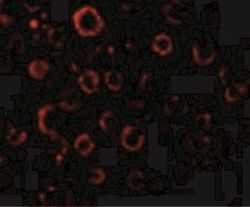
Immunocytochemistry, Immunohistochemistry, Western Blot, Western Blot
Concentration
1 mg/mL
Formulation
PBS with 0.5% BSA, 50% glycerol and 0.02% sodium azide; pH 7.4
Gene Accession No.
Q4TU93, Q64449, Q9UBG0
Gene Symbols
MRC2
Immunogen
Synthesized peptide derived from the N-terminal region of human Endo180.
Quantity
100 μL
Primary or Secondary
Primary
Target Species
Human, Mouse, Rat
Product Type
Antibody
Isotype
IgG
Related Products





Description
- MRC2 Polyclonal Antibody detects endogenous levels of MRC2 protein
- May play a role as endocytotic lectin receptor displaying calcium-dependent lectin activity
- Internalizes glycosylated ligands from the extracellular space for release in an endosomal compartment via clathrin-mediated endocytosis
- May be involved in plasminogen activation system controlling the extracellular level of PLAUR/PLAU, and thus may regulate protease activity at the cell surface
- May contribute to cellular uptake, remodeling and degradation of extracellular collagen matrices
- May play a role during cancer progression as well as in other chronic tissue destructive diseases acting on collagen turnover
- May participate in remodeling of extracellular matrix cooperating with the matrix metalloproteinases (MMPs).