PA551187
Krt222 Polyclonal Antibody, Invitrogen™
Manufacturer: Thermo Scientific
Select a Size
| Pack Size | SKU | Availability | Price |
|---|---|---|---|
| Each of 1 | PA551187-Each-of-1 | In Stock | ₹ 46,502.50 |
PA551187 - Each of 1
In Stock
Quantity
1
Base Price: ₹ 46,502.50
GST (18%): ₹ 8,370.45
Total Price: ₹ 54,872.95
Antigen
Krt222
Classification
Polyclonal
Conjugate
Unconjugated
Gene
Krt222
Gene Alias
6330509G02Rik; KA21; keratin 222; keratin 222 pseudogene; keratin 222, type II; keratin-222; Keratin-222 pseudogene; keratin-like protein KRT222; Krt222; KRT222P
Host Species
Rabbit
Purification Method
Antigen affinity chromatography
Regulatory Status
RUO
Gene ID (Entrez)
125113
Content And Storage
-20°C
Form
Liquid
Applications
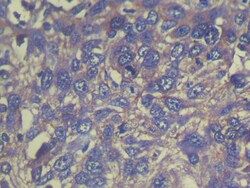
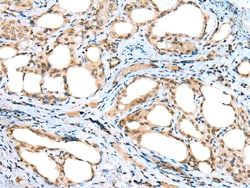
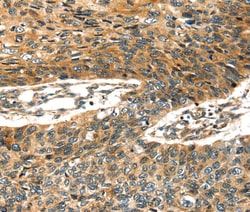
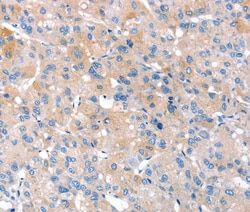
Immunohistochemistry (Paraffin)
Concentration
1.3 mg/mL
Formulation
PBS with 40% glycerol and 0.05% sodium azide; pH 7.4
Gene Accession No.
Q8N1A0
Gene Symbols
Krt222
Immunogen
Full length fusion protein of human KRT222
Quantity
100 μL
Primary or Secondary
Primary
Target Species
Human
Product Type
Antibody
Isotype
IgG
Related Products


Description
- The antibody detects endogenous levels of total KRT222 protein
- KRT222, also known as KRT222P
- KRT222 is a 295 amino acid protein belonging to the intermediate filament family
- The gene encoding KRT222P has been listed as a pseudogene, however it has not been established that the protein is not translated, and is therefore treated as a protein coding gene
- Existing as two alternatively spliced isoforms, the gene encoding KRT222P maps to human chromosome 17, which comprises over 2.5% of the human genome and encodes over 1,200 genes
- Two key tumor suppressor genes are associated with chromosome 17, namely, p53 and BRCA1
- Tumor suppressor p53 is necessary for maintenance of cellular genetic integrity by moderating cell fate through DNA repair versus cell death
- Malfunction or loss of p53 expression is associated with malignant cell growth and Li-Fraumeni syndrome
- Like p53, BRCA1 is directly involved in DNA repair, though specifically it is recognized as a genetic determinant of early onset breast cancer and predisposition to cancers of the ovary, colon, prostate gland and fallopian tubes.