PA551208
RPS15 Polyclonal Antibody, Invitrogen™
Manufacturer: Thermo Scientific
Select a Size
| Pack Size | SKU | Availability | Price |
|---|---|---|---|
| Each of 1 | PA551208-Each-of-1 | In Stock | ₹ 48,104.50 |
PA551208 - Each of 1
In Stock
Quantity
1
Base Price: ₹ 48,104.50
GST (18%): ₹ 8,658.81
Total Price: ₹ 56,763.31
Antigen
RPS15
Classification
Polyclonal
Conjugate
Unconjugated
Gene
RPS15
Gene Alias
40S ribosomal protein S15; homolog of rat insulinoma; insulinoma; insulinoma protein; ribosomal protein S15; rig; RIG protein; RPS15; S15; Small ribosomal subunit protein uS19
Host Species
Rabbit
Purification Method
Antigen affinity chromatography
Regulatory Status
RUO
Gene ID (Entrez)
20054, 29285, 6209
Content And Storage
-20°C
Form
Liquid
Applications
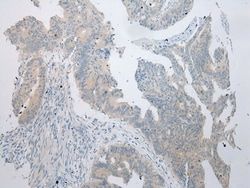
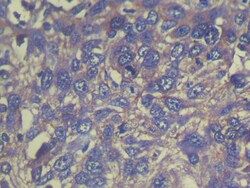
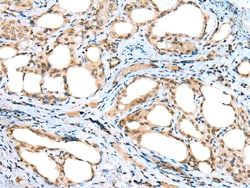
Immunohistochemistry (Paraffin)
Concentration
1.2 mg/mL
Formulation
PBS with 40% glycerol and 0.05% sodium azide; pH 7.4
Gene Accession No.
P62841, P62843, P62845
Gene Symbols
RPS15
Immunogen
Full length fusion protein of human RPS15
Quantity
100 μL
Primary or Secondary
Primary
Target Species
Human, Mouse, Rat
Product Type
Antibody
Isotype
IgG
Related Products

Description
- The antibody detects endogenous levels of total RPS15 protein
- Ribosomes, the organelles that catalyze protein synthesis, consist of a small 40S subunit and a large 60S subunit
- Together these subunits are composed of 4 RNA species and approximately 80 structurally distinct proteins
- This gene encodes a ribosomal protein that is a component of the 40S subunit
- The protein belongs to the S19P family of ribosomal proteins
- It is located in the cytoplasm
- This gene has been found to be activated in various tumors, such as insulinomas, esophageal cancers, and colon cancers
- As is typical for genes encoding ribosomal proteins, there are multiple processed pseudogenes of this gene dispersed through the genome
- Alternative splicing results in multiple transcript variants.