p70 S6 Kinase Recombinant Polyclonal Antibody (15HCLC), Invitrogen™
Manufacturer: Thermo Scientific
Select a Size
| Pack Size | SKU | Availability | Price |
|---|---|---|---|
| Each of 1 | PI710285-Each-of-1 | In Stock | ₹ 44,544.50 |
PI710285 - Each of 1
In Stock
Quantity
1
Base Price: ₹ 44,544.50
GST (18%): ₹ 8,018.01
Total Price: ₹ 52,562.51
Antigen
p70 S6 Kinase
Classification
Recombinant Polyclonal
Concentration
0.5 mg/mL
Formulation
PBS with 0.09% sodium azide
Gene Accession No.
P23443
Gene Symbols
RPS6KB1
Immunogen
Peptide corresponding to amino acids 294–306 of human p70 Ribosomal Protein S6 Kinase
Quantity
100 μg
Primary or Secondary
Primary
Target Species
Human
Product Type
Antibody
Isotype
IgG
Applications
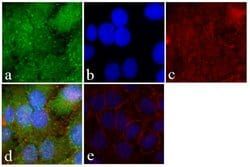
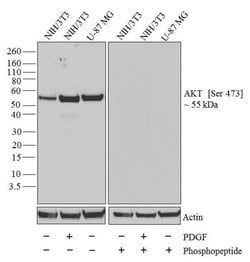
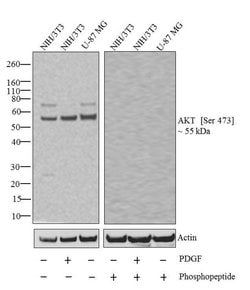
ELISA, Immunocytochemistry, Western Blot
Clone
15HCLC
Conjugate
Unconjugated
Gene
RPS6KB1
Gene Alias
10539; 2610318I15Rik; 4732464A07Rik; 70 kDa ribosomal protein S6 kinase 1; 7084; 70kDa; 7-10; AA959758; AI256796; AI314060; CG10539; CG10539-PA; CG10539-PB; Dmel\CG10539; Dmel_CG10539; Dp70[s6k]; Dp70S6k; dps6k; dS6 kinase; dS6K; d-S6K; dS6K1; EC 2.7.11.1; fs(3)07084; hypothetical protein; kinase p70S6K; KS6B1; l(3)07084; p70 p70-S6K; p70 ribosomal S6 kinase; p70 ribosomal S6 kinase alpha; p70 S6 kinase; p70 S6 kinase 1; p70 S6 kinase alpha; p70 S6 kinase, alpha; p70 S6K; p70 S6KA; p70 S6K-alpha; p70(S6K)-alpha; p70/85s6k; p70/S6K; p70[S6 kinase]; p70[S6k]; p70[S6kinase]; p70-alpha; p70S6 kinase; p70S6k; p70-S6K; p70-S6K 1; p70S6K kinase; p70s6k protein kinase homolog; P70S6K1; p70S6K-alpha; p80-S6K 1; p85 p85S6K; Pk?6; Pk64F; protein kinase-like 64F; PS6K; p-S6K; ribosomal protein S6 kinase; ribosomal protein S6 kinase B1; ribosomal protein S6 kinase beta-1; Ribosomal protein S6 kinase I; ribosomal protein S6 kinase polypeptide 1; ribosomal protein S6 kinase, 70kD, polypeptide 1; ribo
Host Species
Rabbit
Purification Method
Protein A
Regulatory Status
RUO
Gene ID (Entrez)
6198
Content And Storage
Store at 4°C short term. For long term storage, store at -20°C, avoiding freeze/thaw cycles.
Form
Liquid
Related Products

Description
- This antibody is predicted to react with mouse, rat, non-human primate and rabbit based on sequence homology
- Recombinant rabbit polyclonal antibodies are unique offerings from Thermo Fisher Scientific
- They are comprised of a selection of multiple different recombinant monoclonal antibodies, providing the best of both worlds - the sensitivity of polyclonal antibodies with the specificity of monoclonal antibodies - all delivered with the consistency only found in a recombinant antibody
- While functionally the same as a polyclonal antibody - recognizing multiple epitope sites on the target and producing higher detection sensitivity for low abundance targets - a recombinant rabbit polyclonal antibody has a known mixture of light and heavy chains
- The exact population can be produced in every lot, circumventing the biological variability typically associated with polyclonal antibody production
- RPS6KB1 (p70S6K) is a serine/threonine kinase with 2 non-identical kinase catalytic domains which phosphorylates several residues of the S6 ribosomal protein
- p70 S6 kinase is predominantly localized in the cytoplasm, and is essential in growth factors regulated cell proliferation, pathways involving cell motility, such as metastases, the immune response, and tissue repair
- p70 S6 kinase acts downstream of phosphoinositide (PI) 3-kinase, and its main physiological target is the S6 ribosomal protein, which is involved in upregulation of protein synthesis
- The kinase activity of p70 S6 kinase leads to an increase in protein synthesis and cell proliferation
- Amplification of the region of DNA encoding p70 S6 kinase and overexpression are seen in some breast cancer cell lines.