Calprotectin Monoclonal Antibody (27E10), Biotin, Invitrogen™
Manufacturer: Thermo Scientific
Select a Size
| Pack Size | SKU | Availability | Price |
|---|---|---|---|
| Each of 1 | PIMA140314-Each-of-1 | In Stock | ₹ 53,489.00 |
PIMA140314 - Each of 1
In Stock
Quantity
1
Base Price: ₹ 53,489.00
GST (18%): ₹ 9,628.02
Total Price: ₹ 63,117.02
Antigen
Calprotectin
Classification
Monoclonal
Concentration
0.1 mg/mL
Formulation
PBS with 0.1% BSA and 0.02% sodium azide
Gene Accession No.
P05109, P06702
Gene Symbols
S100A8, S100A9
Immunogen
Human blood monocytes
Quantity
50 μg
Primary or Secondary
Primary
Target Species
Human, Non-human Primate, Rhesus Monkey
Product Type
Antibody
Isotype
IgG1
Applications
ELISA, Flow Cytometry, Immunohistochemistry (Frozen), Immunoprecipitation, Western Blot
Clone
27E10
Conjugate
Biotin
Gene
S100A8
Gene Alias
60B8Ag; AI323541; AW546964; B8Ag; BEE11; BEE22; CAGA; CAGB; calcium binding protein; S100 protein; calgranulin A; calgranulin B; calgranulin-A; Calgranulin-B; calprotectin; calprotectin L1H subunit; Calprotectin L1L subunit; CFAG; CGLA; CGLB; chemotactic cytokine CP-10; chemotactic S100 protein; CP-10; Cystic fibrosis antigen; EGK_01322; EGK_21438; GAGB; intracellular calcium-binding protein (MRP14); L1AG; Leukocyte L1 complex heavy chain; leukocyte L1 complex light chain; LIAG; LOC100735514; LOC532569 protein; MA387; MAC387; macrophage migration inhibitory factor-related protein-14; macrophage migration inhibitory factor-related protein-8; MIF; migration inhibitory factor-related protein 14; Migration inhibitory factor-related protein 8; Mrp14; MRP-14; MRP8; MRP-8; myeloid-related protein 14; Neutrophil cytosolic 23 kDa protein; neutrophil cytosolic 7 kDa protein; NIF; p14; p23; P7; p8; Pro-inflammatory S100 cytokine; protein S100-A8; Protein S100-A9; S100 calcium binding protein A8; S100 calcium binding protein A8 (calgranulin A); S100 calcium binding protein A9; S100 calcium binding protein A9 (calgranulin B); S100 calcium binding protein A9; protein S100-A9; S100 calcium-binding protein A8; S100 calcium-binding protein A8 (calgranulin A); S100 calcium-binding protein A9; S100 calcium-binding protein A9 (calgranulin B); S100a8; S100A8/S100A9; S100a9; similar to Calgranulin A (Migration inhibitory factor-related protein 8) (MRP-8) (Cystic fibrosis antigen) (CFAG) (P8) (Leukocyte L1 complex light chain) (S100 calcium-binding protein A8) (Calprotectin L1L subunit) (Urinary stone protein band A)...; urinary stone protein band A
Host Species
Mouse
Purification Method
Protein G
Regulatory Status
RUO
Gene ID (Entrez)
6279, 6280, 714690, 714740
Content And Storage
4° C
Form
Liquid
Related Products
Description
- MA1-40314 detects Calprotectin from human and non-human primate samples
- Does not cross react with mouse
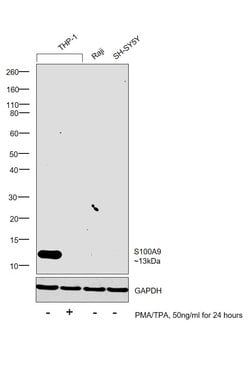
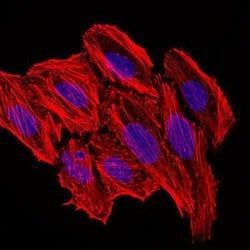
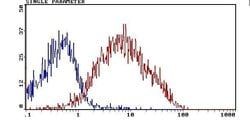
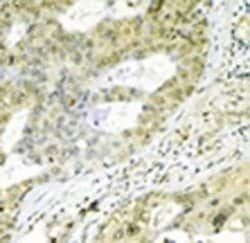
- MA1-40314 has been successfully used in ELISA, immunohistochemistry (frozen), flow cytometry, immunofluorescence, immunoprecipitation and Western blot applications
- For Western blot, detects the non-reduced protein at about 22 kDa
- The MA1-40314 immunogen is proprietary
- The S100A8/A9 heterocomplex, also called MRP-8/MRP-14 complex or calprotectin, comprises 60% of the cytoplasmic protein fraction of circulating polymorphonuclear granulocytes and is also found in monocytes, macrophages and ileal tissue eosinophils
- Peripheral blood monocytes carry the antigen extra- and intracellularly, neutrophils only intracellularly
- The S100A8/A9 complex has antibacterial, antifungal, immunomodulating and antiproliferative effects
- Besides this it is a potent chemotactic factor for neutrophils
- Plasma concentrations are elevated in diseases associated with increased neutrophil activity, like inflammatory bowel disease
- Granulocytes terminate their existence after transmigration through the intestinal wall
- Therefore calprotectin is also detectable in feces
- Elevated levels of calprotectin have been observed in body fluids such as plasma, saliva, gingival crevicular fluid, stools, and synovial fluid during infection and inflammatory conditions.