DFFB Monoclonal Antibody (36A349), Invitrogen™
Manufacturer: Thermo Scientific
Select a Size
| Pack Size | SKU | Availability | Price |
|---|---|---|---|
| Each of 1 | PIMA191618-Each-of-1 | In Stock | ₹ 50,062.50 |
PIMA191618 - Each of 1
In Stock
Quantity
1
Base Price: ₹ 50,062.50
GST (18%): ₹ 9,011.25
Total Price: ₹ 59,073.75
Antigen
DFFB
Classification
Monoclonal
Concentration
0.5 mg/mL
Formulation
PBS with 0.02% sodium azide
Gene Accession No.
O76075
Gene Symbols
DFFB
Immunogen
Anti-DFF40 monoclonal antibody was raised against a peptide corresponding to amino acids 205 to 222 (SYFDRGAKGGSRLCTPEG) of human DFF40.
Quantity
100 μg
Primary or Secondary
Primary
Target Species
Human
Product Type
Antibody
Isotype
IgG1
Applications
Western Blot
Clone
36A349
Conjugate
Unconjugated
Gene
DFFB
Gene Alias
2410008J01Rik; 40kDa; 5730477D02Rik; AU018859; CAD; caspase-activated deoxyribonuclease; caspase-activated DNase; caspase-activated nuclease; Cpad; CPAN; DFF2; DFF-2; DFF40; DFF-40; DFFB; Didff; DNA fragmentation factor 40 kD beta polypeptide (caspase-activated DNase); DNA fragmentation factor 40 kDa subunit; DNA fragmentation factor subunit beta; DNA fragmentation factor, 40 kD, beta polypeptide (caspase-activated DNase); DNA fragmentation factor, 40 kD, beta subunit; DNA fragmentation factor, 40kDa, beta polypeptide (caspase-activated DNase); DNA fragmentation factor, beta polypeptide (caspase-activated DNase); DNA fragmentation factor, beta subunit; DNase inhibited by DNA fragmentation factor; RP13-531C17.1; RP23-254N4.2
Host Species
Mouse
Purification Method
Protein G
Regulatory Status
RUO
Gene ID (Entrez)
1677
Content And Storage
Store at 4°C short term. For long term storage, store at -20°C, avoiding freeze/thaw cycles.
Form
Liquid
Related Products

Description
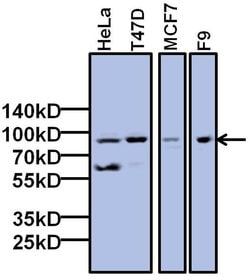
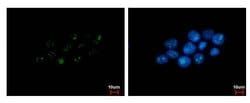
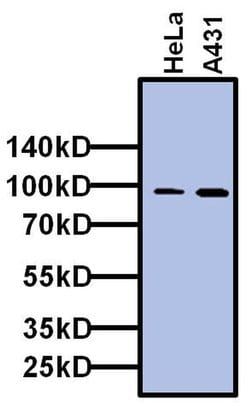
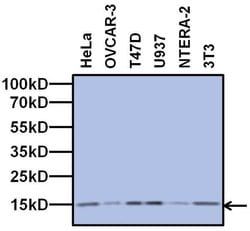
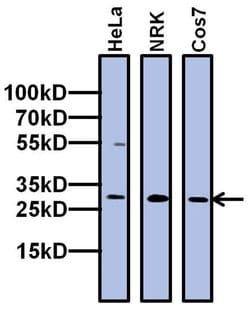
- MA1-91618 detects CAD from human samples
- Caspase-activated DNase (CAD) cleaves chromosomal DNA during apoptosis
- Apoptosis which is a cell death process removing toxic and/or useless cells during mammalian development can be induced by a variety of stimuli, including the death factors of the tumor necrosis factor family, or UV irradiation, anticancer drugs, and survival factor deprivation
- The apoptotic process is accompanied by shrinkage and fragmentation of the cells and nuclei and degradation of the chromosomal DNA into nucleosomal units
- CAD, which can be activated by caspases, exists as a complex with its inhibitor, inhibitor of CAD (ICAD)
- ICAD helps correct folding of CAD and remains complexed with CAD to inhibit the DNase activity of CAD
- Caspase, which is activated during the apoptotic process, cleaves ICAD, and the CAD released from ICAD enters the nuclei to cleave the chromosomal DNA
- Internal as well as external signals can activate caspases and this is under the control of the balance between pro-and anti-apoptotic proteins of the Bcl-2 family, heat shock proteins, and inhibitors of apoptosis proteins (IAPs)
- Currently, fourteen members of the caspase family have been identified, of which seven mediate apoptosis.