N-WASP Monoclonal Antibody (C.427.3), Invitrogen™
Manufacturer: Thermo Scientific
Select a Size
| Pack Size | SKU | Availability | Price |
|---|---|---|---|
| Each of 1 | PIMA515011-Each-of-1 | In Stock | ₹ 43,832.50 |
PIMA515011 - Each of 1
In Stock
Quantity
1
Base Price: ₹ 43,832.50
GST (18%): ₹ 7,889.85
Total Price: ₹ 51,722.35
Antigen
N-WASP
Classification
Monoclonal
Conjugate
Unconjugated
Gene
WASL
Gene Alias
2900021I12Rik; 3110031I02Rik; DKFZp779G0847; MGC48327; n wasp; neural Wiskott-Aldrich syndrome protein; NWASP; N-WASP; TRS4; WASL; WASP like actin nucleation promoting factor; WASPB; Wiskott-Aldrich syndrome like; Wiskott-Aldrich syndrome-like; Wiskott-Aldrich syndrome-like (human)
Host Species
Rabbit
Purification Method
Affinity chromatography
Regulatory Status
RUO
Gene ID (Entrez)
100757697, 281577, 682507, 73178, 8976
Content And Storage
-20°C
Form
Liquid
Applications
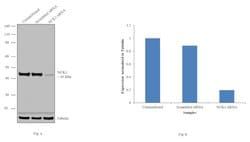
Immunoprecipitation, Western Blot
Clone
C.427.3
Formulation
0.01M HEPES with 0.15M NaCl, 100μg/mL BSA, 50% glycerol and <0.02% sodium azide; pH 7.5
Gene Accession No.
O00401, O08816, Q91YD9, Q95107
Gene Symbols
WASL
Immunogen
Synthetic peptide corresponding the sequence of human N-WASP
Quantity
100 μL
Primary or Secondary
Primary
Target Species
Bovine, Hamster, Human, Mouse, Non-human Primate, Rat
Product Type
Antibody
Isotype
IgG
Related Products

Description
- It is not recommended to aliquot this antibody
- The Wiskott-Aldrich syndrome (WAS) family of proteins share similar domain structure, and are involved in transduction of signals from receptors on the cell surface to the actin cytoskeleton
- The presence of a number of different motifs suggests that they are regulated by a number of different stimuli, and interact with multiple proteins
- Recent studies have demonstrated that these proteins, directly or indirectly, associate with the small GTPase, Cdc42, known to regulate formation of actin filaments, and the cytoskeletal organizing complex, Arp2/3
- The WASL gene product is a homolog of WAS protein, however, unlike the latter, it is ubiquitously expressed and shows highest expression in neural tissues
- It has been shown to bind Cdc42 directly, and induce formation of long actin microspikes.