PIMA516130
HPa1 Monoclonal Antibody (DHIC2-2C12), Invitrogen™
Manufacturer: Thermo Scientific
Select a Size
| Pack Size | SKU | Availability | Price |
|---|---|---|---|
| Each of 1 | PIMA516130-Each-of-1 | In Stock | ₹ 48,015.50 |
PIMA516130 - Each of 1
In Stock
Quantity
1
Base Price: ₹ 48,015.50
GST (18%): ₹ 8,642.79
Total Price: ₹ 56,658.29
Antigen
HPa1
Classification
Monoclonal
Concentration
Not Determined mg/mL
Formulation
tissue culture supernatant with 0.05% sodium azide
Gene Accession No.
Q9Y251
Gene Symbols
HPSE
Immunogen
Human pancreatic enriched alpha cells
Regulatory Status
RUO
Gene ID (Entrez)
10855
Content And Storage
4° C, do not freeze
Form
Liquid
Applications
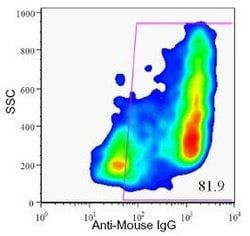
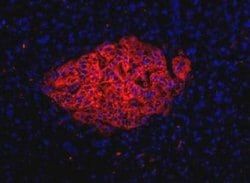
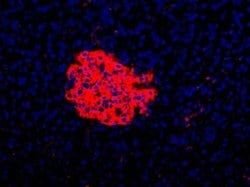
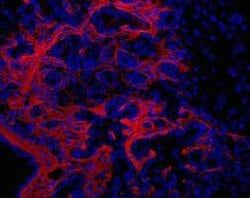
Flow Cytometry, Immunocytochemistry, Immunohistochemistry (Frozen), Western Blot
Clone
DHIC2-2C12
Conjugate
Unconjugated
Gene
HPSE
Gene Alias
Endo-glucoronidase; endoglycosidase heparanase; HEP; Heparanase; Heparanase 50 kDa subunit; Heparanase 8 kDa subunit; Heparanase-1; heparanase-like; Hpa; HPA1; HPR1; HPSE; HPSE1; HSE1
Host Species
Mouse
Quantity
100 μL
Primary or Secondary
Primary
Target Species
Human
Product Type
Antibody
Isotype
IgM
Related Products
Description
- Stem cells offer a therapeutic promise for many diseases
- In the case of diabetes, stem cells offer the promise that beta cells may be generated ex vivo for the possible transplantation and cure of Type I diabetes (Couri CE, et al
- )
- For this to happen, stem cells will need to be isolated and expanded, they will need to be differentiated toward the beta cell lineage, and the differentiated cell progeny used for transplantation may need to be isolated from complex cell mixtures following differentiation
- Appropriate markers targeting cell surface molecules on developing and mature pancreatic cells will be required for such research.