CD3e/CD4 Antibody Cocktail, FITC, PE, Invitrogen™
Manufacturer: Thermo Scientific
Select a Size
| Pack Size | SKU | Availability | Price |
|---|---|---|---|
| Each of 1 | PIMA516607-Each-of-1 | In Stock | ₹ 73,425.00 |
PIMA516607 - Each of 1
In Stock
Quantity
1
Base Price: ₹ 73,425.00
GST (18%): ₹ 13,216.50
Total Price: ₹ 86,641.50
Antigen
CD3e/CD4
Classification
Cocktail
Concentration
Conc. Not Determined
Formulation
PBS with 1% BSA, 5% sucrose and 0.09% sodium azide
Gene Accession No.
P27597, P33705
Gene Symbols
CD247, CD3D, CD3E, CD3G, CD4
Immunogen
Affinity enriched TCR/CD3 membrane proteins isolated from thymocytes and the T cell line CLGL-9, Canine Concanavilin A activated T-cell blasts
Quantity
100 Tests
Primary or Secondary
Primary
Target Species
Canine
Product Type
Antibody
Isotype
IgG1, IgG2a
Applications
Flow Cytometry
Clone
CA17.2A12/YKIX302.9
Conjugate
PE
Gene
CD4
Gene Alias
Cd247; CD247 antigen; CD247 antigen, zeta subunit; CD247 molecule; CD3 antigen delta polypeptide; CD3 antigen, delta subunit; CD3 antigen, epsilon polypeptide; CD3 antigen, gamma polypeptide; CD3 antigen, zeta polypeptide; CD3 delta; CD3 epsilon; CD3 gamma-chain; CD3 molecule delta polypeptide; CD3 molecule, delta; CD3 molecule, epsilon; CD3 molecule, epsilon polypeptide; CD3 molecule, gamma; CD3 molecule, gamma polypeptide; CD3d; CD3d antigen, delta polypeptide (TiT3 complex); CD3d molecule; CD3d molecule, delta (CD3-TCR complex); CD3-DELTA; Cd3e; CD3E antigen, epsilon polypeptide (TiT3 complex); CD3e molecule; CD3e molecule, epsilon (CD3-TCR complex); CD3-epsilon; Cd3g; CD3g antigen, gamma polypeptide (TiT3 complex); CD3g molecule; CD3g molecule, epsilon (CD3-TCR complex); CD3g molecule, gamma (CD3-TCR complex); CD3-GAMMA; CD3H; CD3Q; Cd3z; CD3Z antigen, zeta polypeptide (TiT3 complex); CD3-ZETA; CD3zeta chain; Cd4; CD4 antigen; CD4 antigen (p55); CD4 antigen p55; CD4 molecule; CD4 receptor; CD4mut; FLJ18683; IMD17; IMD18; IMD19; IMD25; Leu-2; MAL; OKT3, delta chain; OKT8 T-cell antigen; p55; T cell co-receptor; T3D; T3E; T3G; T3Z; T8 T-cell antigen; T-cell antigen Leu2; T-cell antigen receptor complex, epsilon subunit of T3; T-cell antigen receptor complex, gamma subunit of T3; T-cell antigen receptor complex, zeta subunit of CD3; T-cell receptor CD3 subunit zeta; T-cell receptor CD3, subunit zeta; T-cell receptor T3 delta chain; T-cell receptor T3 gamma chain; T-cell receptor T3 zeta chain; T-cell surface antigen T3/Leu-4 epsilon chain; T-cell surface antigen T4/Leu-3; T-cell surface glycoprotein CD3 delta chain; T-cell surface glycoprotein CD3 epsilon chain; T-cell surface glycoprotein CD3 gamma chain; T-cell surface glycoprotein CD3 zeta chain; T-cell surface glycoprotein CD4; TCR zeta chain; TCRE; TCRZ; TCRzeta; W3/25; W3/25 antigen
Host Species
Mixed
Purification Method
purified
Regulatory Status
RUO
Gene ID (Entrez)
403931, 442981, 479419, 489383, 611571
Content And Storage
4° C, store in dark, DO NOT FREEZE!
Form
Lyophilized
Related Products

Description
- CD3e FITC reagent: IgG1 (mouse)
- CD4 RPE reagent: IgG2a (rat)
- Clone CA17.2A12 recognizes canine CD3 epsilon, a T cell differentiation antigen expressed on mature T lymphocytes
- Clone YKIX 302.9 recognizes canine CD4, which is expressed by lymphocyte subsets and canine neutrophils
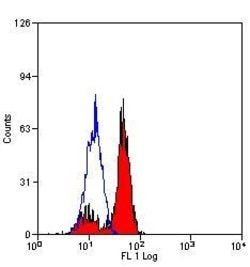
- For FACS analysis, use 10 μL of the suggested working dilution to label 1x10^6 cells in 100 μL
- Reconstitute with 1 mL distilled water
- After reconstitution, store product undiluted at 4oC in the dark
- CD3 complex is crucial in transducing antigen-recognition signals into the cytoplasm of T cells and in regulating the cell surface expression of the TCR complex
- T cell activation through the antigen receptor (TCR) involves the cytoplasmic tails of the CD3 subunits CD3 gamma, CD3 delta, CD3 epsilon and CD3 zeta
- These CD3 subunits are structurally related members of the immunoglobulins super family encoded by closely linked genes on human chromosome 11
- The CD3 components have long cytoplasmic tails that associate with cytoplasmic signal transduction molecules
- This association is mediated at least in part by a double tyrosine-based motif present in a single copy in the CD3 subunits
- CD3 may play a role in TCR-induced growth arrest, cell survival and proliferation
- The CD3 antigen is present on 68-82% of normal peripheral blood lymphocytes, 65-85% of thymocytes and Purkinje cells in the cerebellum
- It is never expressed on B or NK cells
- Decreased percentages of T lymphocytes may be observed in some autoimmune diseases
- The CD4 antigen is involved in the recognition of the type II MHC antigen
- It is also a receptor for HIV
- It is present on most T helper cells and normal thymocytes
- The cytoplasmic portion of CD4 is associated with p56lck tyrosine kinase
- CD4 expression is commonly found in human lymph nodes and tonsils
- CD44 is a type 1 transmembrane glycoprotein also known as Phagocytic Glycoprotein-1 (pgp-1) and HCAM
- CD44 is the receptor for hyaluronate and exists as a large number of different isoforms due to alternative RNA splicing
- The major isoform expressed on lymphocytes, myeloid cells, and erythrocytes is a glycosylated type 1 transmembrane protein
- Other isoforms contain glycosaminoglycans and are expressed on hematopoietic and non-hematopoietic cells
- CD44 is involved in adhesion of leukocytes to endothelial cells, stromal cells, and the extracellular matrix.