ORC1 Monoclonal Antibody (7A7), Invitrogen™
Manufacturer: Thermo Scientific
Select a Size
| Pack Size | SKU | Availability | Price |
|---|---|---|---|
| Each of 1 | PIMA517025-Each-of-1 | In Stock | ₹ 44,633.50 |
PIMA517025 - Each of 1
In Stock
Quantity
1
Base Price: ₹ 44,633.50
GST (18%): ₹ 8,034.03
Total Price: ₹ 52,667.53
Antigen
ORC1
Classification
Monoclonal
Concentration
1 mg/mL
Formulation
PBS with 0.1% sodium azide
Gene Accession No.
Q13415
Gene Symbols
Orc1
Immunogen
Full length human ORC1 protein
Quantity
50 μL
Primary or Secondary
Primary
Target Species
Human
Product Type
Antibody
Isotype
IgG1
Applications
Immunoprecipitation, Western Blot
Clone
7A7
Conjugate
Unconjugated
Gene
Orc1
Gene Alias
AA545195; HS; HSORC1; MmORC1; orc1; orc1.L; Orc1l; origin recognition complex protein 1; origin recognition complex subunit 1; origin recognition complex subunit 1 L homeolog; origin recognition complex, subunit 1; origin recognition complex, subunit 1 homolog; origin recognition complex, subunit 1-like; PARC1; Replication control protein 1; XELAEV_18023178mg; xorc1
Host Species
Rat
Purification Method
Protein G
Regulatory Status
RUO
Gene ID (Entrez)
4998
Content And Storage
Store at 4°C short term. For long term storage, store at -20°C, avoiding freeze/thaw cycles.
Form
Liquid
Related Products



Description
- MA5-17025 reacts with ORC1 in human samples
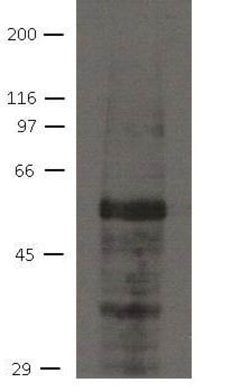
- MA5-17025 has been successfully used in immunoprecipitation and Western blot applications
- The MA5-17025 immunogen is ORC1 (hsORC) produced in P3-x63Ag.8.653 cells
- The origin recognition complex (ORC) is a highly conserved six subunits protein complex essential for the initiation of the DNA replication in eukaryotic cells
- Studies in yeast demonstrated that ORC binds specifically to origins of replication and serves as a platform for the assembly of additional initiation factors such as Cdc6 and Mcm proteins
- The protein encoded by this gene is the largest subunit of the ORC complex
- While other ORC subunits are stable throughout the cell cycle, the levels of this protein vary during the cell cycle, which has been shown to be controlled by ubiquitin-mediated proteolysis after initiation of DNA replication
- This protein is found to be selectively phosphorylated during mitosis
- It is also reported to interact with MYST histone acetyltransferase 2 (MyST2/HBO1), a protein involved in control of transcription silencing.