CD357 (AITR/GITR) Monoclonal Antibody (YGITR765.4.16), PE, Invitrogen™
Manufacturer: Thermo Scientific
Select a Size
| Pack Size | SKU | Availability | Price |
|---|---|---|---|
| Each of 1 | PIMA517934-Each-of-1 | In Stock | ₹ 24,875.50 |
PIMA517934 - Each of 1
In Stock
Quantity
1
Base Price: ₹ 24,875.50
GST (18%): ₹ 4,477.59
Total Price: ₹ 29,353.09
Antigen
CD357 (AITR/GITR)
Classification
Monoclonal
Concentration
0.1 mg/mL
Formulation
PBS with 4-5mg/mL BSA and 0.02% sodium azide
Gene Accession No.
O35714
Gene Symbols
Tnfrsf18
Immunogen
Mouse GITR transfectant
Quantity
50 μg
Primary or Secondary
Primary
Target Species
Mouse
Product Type
Antibody
Isotype
IgG2b
Applications
Flow Cytometry
Clone
YGITR765.4.16
Conjugate
PE
Gene
Tnfrsf18
Gene Alias
Activation-inducible TNFR family receptor; AITR; CD357; GITR; GITR-D; glucocorticoid-induced TNFR-related protein; PRO364; TNF receptor superfamily activation-inducible protein; TNF receptor superfamily member 18; TNFRSF18; Tumor necrosis factor receptor superfamily member 18; tumor necrosis factor receptor superfamily, member 18; UNQ319; UNQ319/PRO364
Host Species
Rat
Purification Method
Protein G
Regulatory Status
RUO
Gene ID (Entrez)
21936
Content And Storage
4° C, do not freeze
Form
Liquid
Related Products

Description
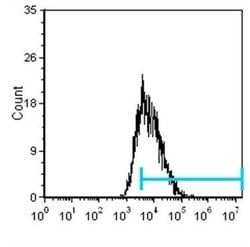
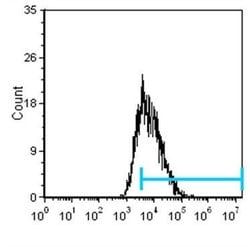
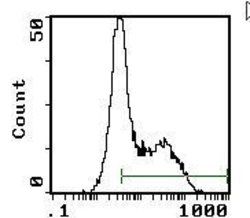
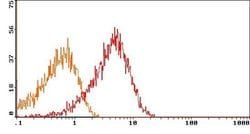
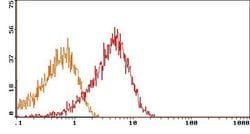
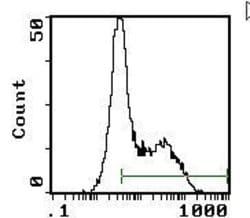
- MA5-17934 targets GITR in FACS applications and shows reactivity with Mouse samples
- The MA5-17934 immunogen is mouse GITR transfectant
- Tumor necrosis factor receptor superfamily member 18 (TNFRSF18), also called GITR or AITR is a protein that in humans is encoded by the TNFRSF18 gene
- It is mapped to 1p36.33
- This gene encodes a member of the TNF-receptor superfamily
- The encoded receptor has been shown to have increased expression upon T-cell activation, and it is thought to play a key role in dominant immunological self-tolerance maintained by CD25 (+)CD4 (+) regulatory T cells
- Knockout studies in mice also suggest the role of this receptor is in the regulation of CD3-driven T-cell activation and programmed cell death
- Three alternatively spliced transcript variants of this gene encoding distinct isoforms have been reported.