PIMA517943
CD105 Monoclonal Antibody (MJ7/18), Invitrogen™
Manufacturer: Thermo Scientific
Select a Size
| Pack Size | SKU | Availability | Price |
|---|---|---|---|
| Each of 1 | PIMA517943-Each-of-1 | In Stock | ₹ 41,385.00 |
PIMA517943 - Each of 1
In Stock
Quantity
1
Base Price: ₹ 41,385.00
GST (18%): ₹ 7,449.30
Total Price: ₹ 48,834.30
Antigen
CD105
Classification
Monoclonal
Concentration
1 mg/mL
Formulation
PBS with 0.02% sodium azide
Gene Accession No.
Q63961
Gene Symbols
ENG
Immunogen
Rat monoclonal antibody raised against inflamed mouse skin.
Quantity
250 μg
Primary or Secondary
Primary
Target Species
Mouse
Product Type
Antibody
Isotype
IgG2a κ
Applications
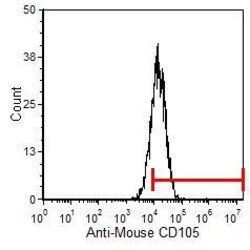
Flow Cytometry, Immunohistochemistry, Immunoprecipitation, Western Blot
Clone
MJ7/18
Conjugate
Unconjugated
Gene
ENG
Gene Alias
AI528660; AI662476; CD105; CD105 antigen; cell surface MJ7/18 antigen; Edg; END; Endo; Endoglin; endoglin (Osler-Rendu-Weber syndrome 1); Eng; HHT1; ORW; ORW1; S-endoglin; transmembrane glycoprotein
Host Species
Rat
Purification Method
Protein G
Regulatory Status
RUO
Gene ID (Entrez)
13805
Content And Storage
Store at 4°C short term. For long term storage, store at -20°C, avoiding freeze/thaw cycles.
Form
Liquid
Related Products


Description
- MA5-17943 targets CD105/Endoglin in FACS, IHC, IP, and WB applications and shows reactivity with Mouse samples
- The MA5-17943 immunogen is rat monoclonal antibody raised against inflamed mouse skin
- CD105 or Endoglin is a Type I transmembrane protein, which is highly expressed on human vascular endothelial cells
- It exists on an O- and N-glycosylated homodimer
- Up regulation of endoglin expression has been demonstrated in tumor vasculature and proliferating cells, suggesting that it is a proliferation associated endothelial marker
- CD105 binds to TGF beta 1 and 3 with high affinity but not to TGF beta 2.