CD160 Monoclonal Antibody (CNX46-3), FITC, Invitrogen™
Manufacturer: Thermo Scientific
Select a Size
| Pack Size | SKU | Availability | Price |
|---|---|---|---|
| Each of 1 | PIMA517967-Each-of-1 | In Stock | ₹ 31,328.00 |
PIMA517967 - Each of 1
In Stock
Quantity
1
Base Price: ₹ 31,328.00
GST (18%): ₹ 5,639.04
Total Price: ₹ 36,967.04
Antigen
CD160
Classification
Monoclonal
Concentration
0.1 mg/mL
Formulation
PBS with 4-5mg/mL BSA and 0.02% sodium azide
Gene Accession No.
O88875
Gene Symbols
CD160
Immunogen
Mouse CD160
Quantity
100 μg
Primary or Secondary
Primary
Target Species
Mouse
Product Type
Antibody
Isotype
IgG2a κ
Applications
Flow Cytometry, Western Blot
Clone
CNX46-3
Conjugate
FITC
Gene
CD160
Gene Alias
AU045688; BY55; CD160; CD160 antigen; CD160 antigen, soluble form; CD160 molecule; CD160 transmembrane isoform; CD160-delta Ig; natural killer cell BY55; natural killer cell receptor; natural killer cell receptor BY55; natural killer cell receptor, immunoglobulin superfamily member; NK1; NK28; RGD1563598
Host Species
Rat
Purification Method
Protein G
Regulatory Status
RUO
Gene ID (Entrez)
54215
Content And Storage
Store at 4°C short term. For long term storage, store at -20°C, avoiding freeze/thaw cycles. Store in the dark.
Form
Liquid
Related Products
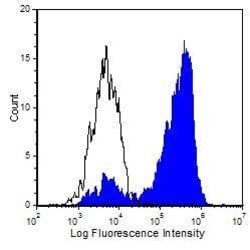
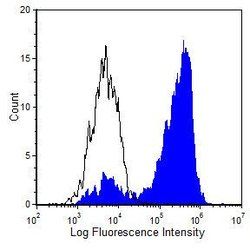
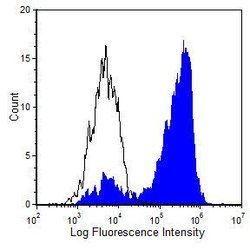


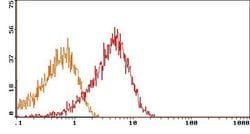
Description
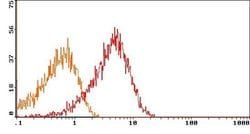
- MA5-17967 targets CD160/BY55 antigen in FACS and WB applications and shows reactivity with Mouse samples
- The MA5-17967 immunogen is mouse CD160
- CD160 is a receptor showing broad specificity for both classical and non-classical MHC class I molecules
- CD160 is expressed at the cell surface as a tightly disulfide-linked multimer
- It is involved in cell proliferation, cell surface receptor signaling pathways, cellular defense response, and regulation of immune response.