EAPP Monoclonal Antibody (1E4), Invitrogen™
Manufacturer: Thermo Scientific
Select a Size
| Pack Size | SKU | Availability | Price |
|---|---|---|---|
| Each of 1 | PIMA518062-Each-of-1 | In Stock | ₹ 49,884.50 |
PIMA518062 - Each of 1
In Stock
Quantity
1
Base Price: ₹ 49,884.50
GST (18%): ₹ 8,979.21
Total Price: ₹ 58,863.71
Antigen
EAPP
Classification
Monoclonal
Concentration
1 mg/mL
Formulation
PBS with 0.1% sodium azide
Gene Accession No.
Q56P03, Q5BU09
Gene Symbols
EAPP
Immunogen
N-terminal fragment of human EAPP (Immunogen sequence: 1-266)
Quantity
100 μL
Primary or Secondary
Primary
Target Species
Human, Mouse
Product Type
Antibody
Isotype
IgG1
Applications
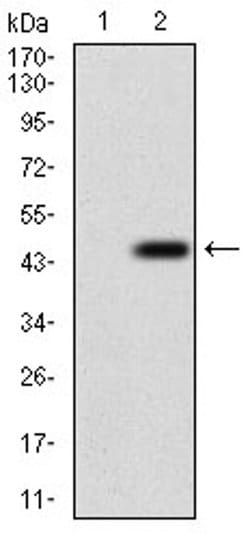
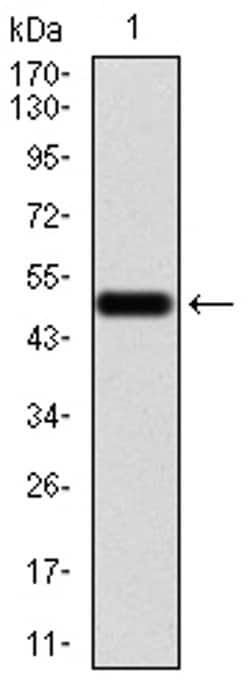
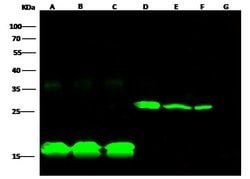
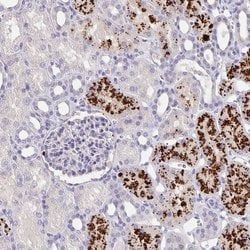
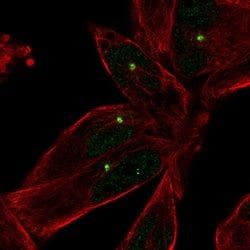
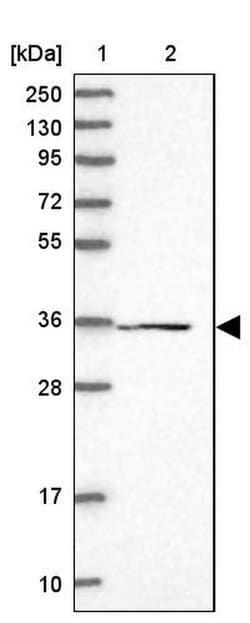
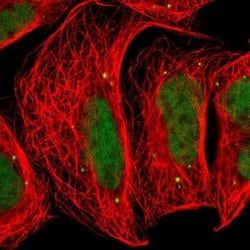
Immunocytochemistry, Immunoprecipitation, Western Blot
Clone
1E4
Conjugate
Unconjugated
Gene
EAPP
Gene Alias
1810011O16Rik; BM036; BM-036; c14orf11; E2F associated phosphoprotein; E2F-associated phosphoprotein; Eapp; hypothetical protein LOC327318; RGD1309624; Unknown (protein for MGC:139672); wu:fd21g02; zgc:65820
Host Species
Mouse
Purification Method
Protein G
Regulatory Status
RUO
Gene ID (Entrez)
55837, 66266
Content And Storage
Store at 4°C short term. For long term storage, store at -20°C, avoiding freeze/thaw cycles.
Form
Liquid
Related Products
Description
- This protein may play an important role in the fine-tuning of both major E2F1 activities, the regulation of the cell-cycle and the induction of apoptosis
- Promotes S-phase entry, and inhibits p14(ARP) expression
- The E2F family plays a crucial role in the control of cell cycle and action of tumor suppressor proteins and is also a target of the transforming proteins of small DNA tumor viruses
- The E2F proteins contain several evolutionally conserved domains found in most members of the family
- These domains include a DNA binding domain, a dimerization domain which determines interaction with the differentiation regulated transcription factor proteins (DP), a transactivation domain enriched in acidic amino acids, and a tumor suppressor protein association domain which is embedded within the transactivation domain
- The C-terminal of EAPP binds the N-terminal of E2F1 and also interacts with E2F2 and E2F3, but not E2F4.