PRRG2 Monoclonal Antibody (7D1), Invitrogen™
Manufacturer: Thermo Scientific
Select a Size
| Pack Size | SKU | Availability | Price |
|---|---|---|---|
| Each of 1 | PIMA524420-Each-of-1 | In Stock | ₹ 47,481.50 |
PIMA524420 - Each of 1
In Stock
Quantity
1
Base Price: ₹ 47,481.50
GST (18%): ₹ 8,546.67
Total Price: ₹ 56,028.17
Antigen
PRRG2
Classification
Monoclonal
Conjugate
Unconjugated
Gene
PRRG2
Gene Alias
1600014G02Rik; 2510041M06Rik; N4WBP1; NEDD4 WW domain-binding protein 1; PRGP2; proline rich and Gla domain 2; proline rich Gla (G-carboxyglutamic acid) 2; proline-rich gamma-carboxyglutamic acid protein 2; proline-rich Gla (G-carboxglutamic acid) polypeptide 2; proline-rich Gla (G-carboxyglutamic acid) polypeptide 2; proline-rich Gla protein 2; Prrg2; TMG2; Transmembrane gamma-carboxyglutamic acid protein 2
Host Species
Mouse
Purification Method
Protein A
Regulatory Status
RUO
Gene ID (Entrez)
5639
Content And Storage
-20° C, Avoid Freeze/Thaw Cycles
Form
Liquid
Applications
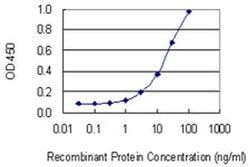
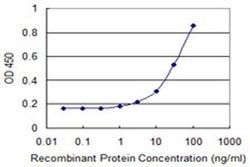
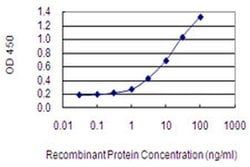
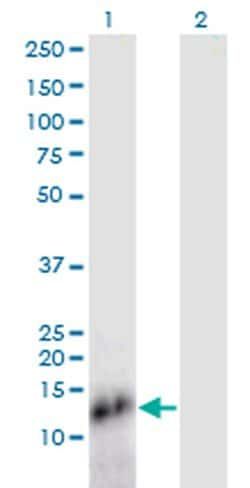
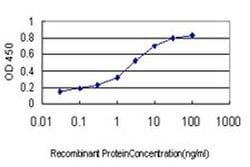
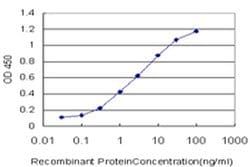
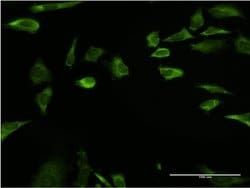
ELISA, Western Blot
Clone
7D1
Formulation
PBS with no preservative; pH 7.4
Gene Accession No.
O14669
Gene Symbols
PRRG2
Immunogen
PRRG2 (NP_000942, 50 a.a. ∽ 109 a.a) partial recombinant protein with GST tag. MW of the GST tag alone is 26 KDa.
Quantity
100 μg
Primary or Secondary
Primary
Target Species
Human
Product Type
Antibody
Isotype
IgG1 κ
Related Products

Description
- Peptide Sequence: ANHWDLELLT PGNLERECLE ERCSWEEARE YFEDNTLTER FWESYIYNGK GGRGRVDVAS PRRG2 encodes a protein that is a single-pass transmembrane protein containing an N-terminal gamma-carboxyglutamic acid (Gla) domain and tandem Pro/Leu-Pro-Xaa-Tyr (PY) motifs at its C-terminal end
- The Gla domain is exposed on the cell surface while the PY motifs are cytoplasmic
- The PY motifs of the encoded protein have been shown to interact with YAP1, a WW domain-containing protein
- Therefore, it is thought that the encoded protein may be part of a signal transduction pathway
- Two transcript variants encoding different isoforms have been found for this gene.