PIMA524439
ZHX1 Monoclonal Antibody (5E5), Invitrogen™
Manufacturer: Thermo Scientific
Select a Size
| Pack Size | SKU | Availability | Price |
|---|---|---|---|
| Each of 1 | PIMA524439-Each-of-1 | In Stock | ₹ 47,481.50 |
PIMA524439 - Each of 1
In Stock
Quantity
1
Base Price: ₹ 47,481.50
GST (18%): ₹ 8,546.67
Total Price: ₹ 56,028.17
Antigen
ZHX1
Classification
Monoclonal
Conjugate
Unconjugated
Gene
ZHX1
Gene Alias
Zhx1; zinc finger and homeodomain protein 1; zinc fingers and homeobox 1; zinc fingers and homeoboxes 1; zinc fingers and homeoboxes protein 1; zinc-fingers and homeoboxes 1
Host Species
Mouse
Purification Method
Protein A
Regulatory Status
RUO
Gene ID (Entrez)
11244
Content And Storage
-20° C, Avoid Freeze/Thaw Cycles
Form
Liquid
Applications
ELISA
Clone
5E5
Formulation
PBS with no preservative; pH 7.4
Gene Accession No.
Q9UKY1
Gene Symbols
ZHX1
Immunogen
ZHX1 (NP_009153, 731 a.a. ∽ 829 a.a) partial recombinant protein with GST tag. MW of the GST tag alone is 26 KDa.
Quantity
100 μg
Primary or Secondary
Primary
Target Species
Human
Product Type
Antibody
Isotype
IgG2a κ
Related Products
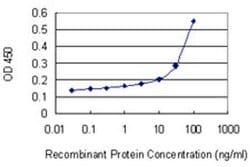
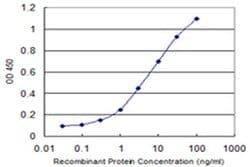
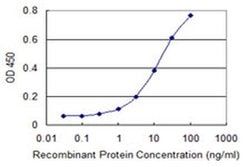
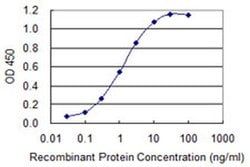

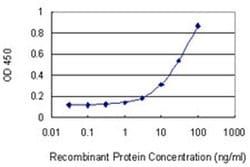
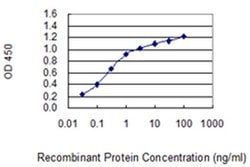
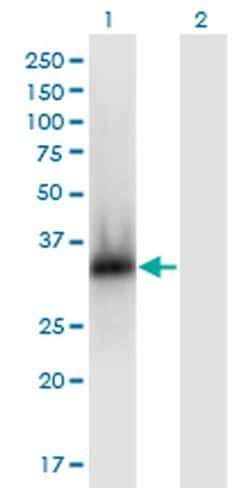
Description
- Peptide Sequence: SSSMNGLSSL RKRGRGRPKG RGRGRPRGRP RGSKRINNWD RGPSLIKFKT GTAILKDYYL KRKFLNEQDL DELVNKSHMG YEQVREWFAE RQRRSELGI The members of the zinc fingers and homeoboxes gene family are nuclear homodimeric transcriptional repressors that interact with the A subunit of nuclear factor-Y (NF-YA) and contain two C2H2-type zinc fingers and five homeobox DNA-binding domains
- This gene encodes member 1 of this gene family
- In addition to forming homodimers, this protein heterodimerizes with members 2 and 3 of the zinc fingers and homeoboxes family
- Alternative splicing results in multiple transcript variants encoding the same protein.