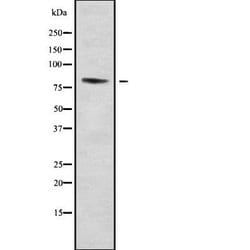
ABCG8 Monoclonal Antibody (1B10A5), Invitrogen™
Manufacturer: Thermo Scientific
Select a Size
| Pack Size | SKU | Availability | Price |
|---|---|---|---|
| Each of 1 | PIMA524788-Each-of-1 | In Stock | ₹ 47,036.50 |
PIMA524788 - Each of 1
In Stock
Quantity
1
Base Price: ₹ 47,036.50
GST (18%): ₹ 8,466.57
Total Price: ₹ 55,503.07
Antigen
ABCG8
Classification
Monoclonal
Concentration
1 mg/mL
Formulation
tris glycine with 0.15M NaCl and 0.05% sodium azide
Gene Accession No.
Q9DBM0, Q9H221
Gene Symbols
Abcg8
Immunogen
Full length mouse ABCG8.
Quantity
100μL
Primary or Secondary
Primary
Target Species
Human, Mouse
Product Type
Antibody
Isotype
IgG
Applications
Immunocytochemistry, Immunohistochemistry (Paraffin), Immunoprecipitation, Western Blot
Clone
1B10A5
Conjugate
Unconjugated
Gene
Abcg8
Gene Alias
1300003C16Rik; ABCG8; AI114946; ATP binding cassette subfamily G member 8; ATP-binding cassette sub-family G member 8; ATP-binding cassette, subfamily G (WHITE), member 8; ATP-binding cassette, sub-family G (WHITE), member 8; ATP-binding cassette, subfamily G, member 8; GBD4; MGC142217; sterolin 2; Sterolin2; sterolin-2; STSL
Host Species
Mouse
Purification Method
Protein G
Regulatory Status
RUO
Gene ID (Entrez)
64241, 67470
Content And Storage
Store at 4°C short term. For long term storage, store at -20°C, avoiding freeze/thaw cycles.
Form
Liquid
Related Products
Description
- ATP-binding cassette (ABC) transporter genes are involved in the regulation of the amount of dietary cholesterol retained in the body
- ABCG8, expressed at high levels in the liver and intestine, normally cooperates with ABCG5 to limit intestinal absorption and promote biliary excretion of sterols
- The mutated form of this transporter can lead to sterol accumulation and atherosclerosis or sitosterolemia, a rare autosomal recessive disorder, characterized by hyperabsorption of sterols and the inability to excrete sterols into bile.