SHPRH Monoclonal Antibody (OTI3F8), Invitrogen™
Manufacturer: Thermo Scientific
Select a Size
| Pack Size | SKU | Availability | Price |
|---|---|---|---|
| Each of 1 | PIMA525180-Each-of-1 | In Stock | ₹ 52,198.50 |
PIMA525180 - Each of 1
In Stock
Quantity
1
Base Price: ₹ 52,198.50
GST (18%): ₹ 9,395.73
Total Price: ₹ 61,594.23
Antigen
SHPRH
Classification
Monoclonal
Concentration
1 mg/mL
Formulation
PBS with 1% BSA, 50% glycerol and 0.02% sodium azide; pH 7.3
Gene Accession No.
Q149N8
Gene Symbols
SHPRH
Immunogen
Human recombinant protein fragment corresponding to amino acids 1-100 and 1500
Quantity
100μL
Primary or Secondary
Primary
Target Species
Human
Product Type
Antibody
Isotype
IgG2b
Applications
Western Blot
Clone
OTI3F8
Conjugate
Unconjugated
Gene
SHPRH
Gene Alias
2610103K11Rik; AA450458; AU024614; bA545I5.2; BC006883; D230017O13Rik; E130018M05; E3 ubiquitin-protein ligase SHPRH; KIAA2023; RING-type E3 ubiquitin transferase SHPRH; Shprh; SNF2 histone linker PHD RING helicase; SNF2 histone linker PHD RING helicase, E3 ubiquitin protein ligase; SNF2, histone-linker, PHD and RING finger domain-containing helicase
Host Species
Mouse
Purification Method
Affinity Chromatography
Regulatory Status
RUO
Gene ID (Entrez)
257218
Content And Storage
-20° C, Avoid Freeze/Thaw Cycles
Form
Liquid
Related Products

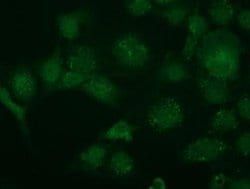

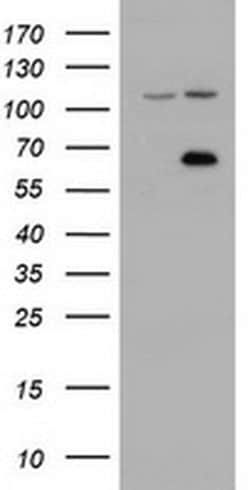
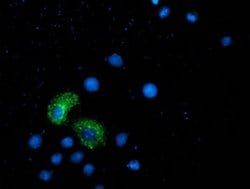

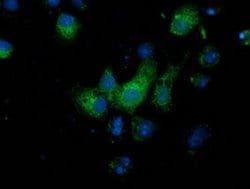

Description
- A novel gene containing SNF2, PHD-finger, RING-finger, helicase, and linker histone domains termed SHPRH, is a possible candidate for a tumor suppressor gene
- These domains are characteristic of several DNA repair proteins, transcription factors, and helicases
- Mapping of this gene to 6q24, a region reported to contain a tumor suppressor locus suggests a role in tumor suppression.