PIMA525305
RASD2 Monoclonal Antibody (OTI1G1), Invitrogen™
Manufacturer: Thermo Scientific
Select a Size
| Pack Size | SKU | Availability | Price |
|---|---|---|---|
| Each of 1 | PIMA525305-Each-of-1 | In Stock | ₹ 52,198.50 |
PIMA525305 - Each of 1
In Stock
Quantity
1
Base Price: ₹ 52,198.50
GST (18%): ₹ 9,395.73
Total Price: ₹ 61,594.23
Antigen
RASD2
Classification
Monoclonal
Concentration
0.66 mg/mL
Formulation
PBS with 1% BSA, 50% glycerol and 0.02% sodium azide; pH 7.3
Gene Accession No.
Q96D21
Gene Symbols
RASD2
Immunogen
Full length human recombinant protein of RASD2 produced in HEK293T cell
Quantity
100μL
Primary or Secondary
Primary
Target Species
Canine, Human
Product Type
Antibody
Isotype
IgG2a
Applications
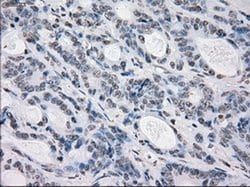
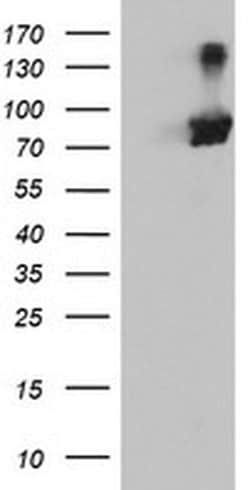
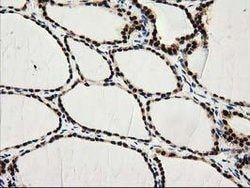
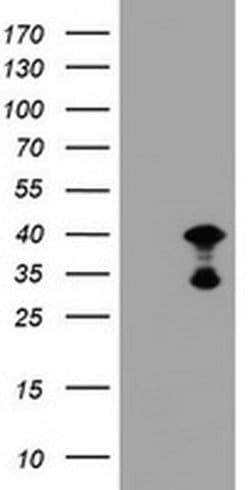
Flow Cytometry, Immunohistochemistry (Paraffin), Western Blot
Clone
OTI1G1
Conjugate
Unconjugated
Gene
RASD2
Gene Alias
4930526B11Rik; AU045414; GTP-binding protein Rhes; MGC:4834; Ras homolog enriched in striatum; RASD family member 2; RASD family, member 2; Rasd2; Rhes; SE6C; TEM2; TEM-2; Tumor endothelial marker 2
Host Species
Mouse
Purification Method
Affinity Chromatography
Regulatory Status
RUO
Gene ID (Entrez)
23551, 481284
Content And Storage
-20° C, Avoid Freeze/Thaw Cycles
Form
Liquid
Related Products
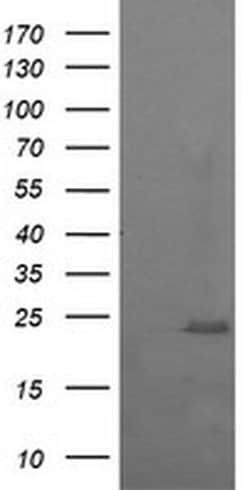
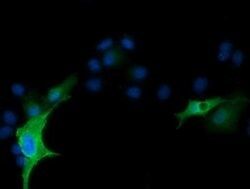
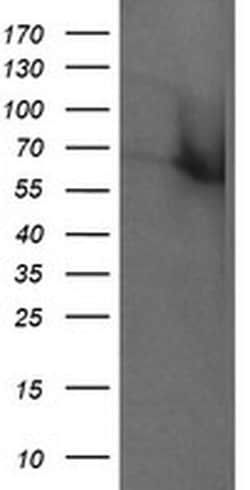
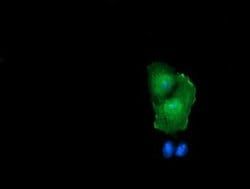
Description
- Rhes, also known as tumor endothelial marker 2 (TEM2), is a small GTP-binding protein that is predominantly expressed in the striatal region of the brain
- This protein belongs to the RASD subfamily of Ras-related GTP-binding protein superfamily and is thought to play a role in the normal development and function of the brain as mice lacking this gene showed increased anxiety levels and motor coordination deficits
- Rhes was identified as TEM2 through analysis of genes whose expression was upregulated in tumor endothelium
- Tumor endothelial markers are significantly up-regulated during angiogenesis and neoangiogenesis that are crucial for the growth of solid tumors
- TEMs localized on the cell surface and conserved across species are of particular interest for future development of anti-angiogenic therapies.