PBLD Monoclonal Antibody (OTI7G5), Invitrogen™
Manufacturer: Thermo Scientific
Select a Size
| Pack Size | SKU | Availability | Price |
|---|---|---|---|
| Each of 1 | PIMA525311-Each-of-1 | In Stock | ₹ 52,198.50 |
PIMA525311 - Each of 1
In Stock
Quantity
1
Base Price: ₹ 52,198.50
GST (18%): ₹ 9,395.73
Total Price: ₹ 61,594.23
Antigen
PBLD
Classification
Monoclonal
Concentration
0.87 mg/mL
Formulation
PBS with 1% BSA, 50% glycerol and 0.02% sodium azide; pH 7.3
Gene Accession No.
P30039
Gene Symbols
PBLD
Immunogen
Full length human recombinant protein of PBLD produced in HEK293T cell
Quantity
100μL
Primary or Secondary
Primary
Target Species
Human
Product Type
Antibody
Isotype
IgG1
Applications
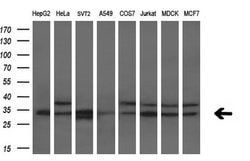
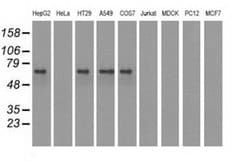
Flow Cytometry, Immunocytochemistry, Western Blot
Clone
OTI7G5
Conjugate
Unconjugated
Gene
PBLD
Gene Alias
0610038K03Rik; epididymis secretory protein Li 306; HEL-S-306; Mawbp; Mawbp2; MAWD binding protein; MAWD binding protein homolog 1; MAWD-binding protein; MAWDBP; Pbld; Pbld1; phenazine biosynthesis like protein domain containing; phenazine biosynthesis-like domain-containing protein; Phenazine biosynthesis-like domain-containing protein 1; phenazine biosynthesis-like protein domain containing; phenazine biosynthesis-like protein domain containing 1; similar to MAWD binding protein (Unknown protein 32 from 2D-page of liver tissue); sphenazine biosynthesis-like protein domain containing; Unknown protein 32 from 2D-page of liver tissue
Host Species
Mouse
Purification Method
Affinity Chromatography
Regulatory Status
RUO
Gene ID (Entrez)
64081
Content And Storage
-20° C, Avoid Freeze/Thaw Cycles
Form
Liquid
Related Products
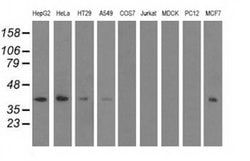
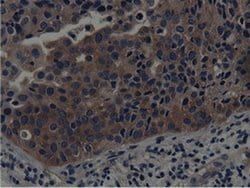
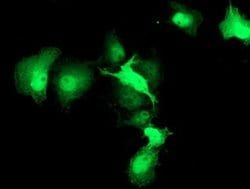
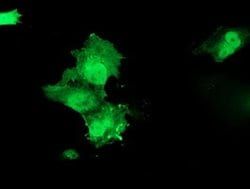


Description
- The function of the PBLD protein remains unknown.