CDCP1 Monoclonal Antibody (OTI2B8), Invitrogen™
Manufacturer: Thermo Scientific
Select a Size
| Pack Size | SKU | Availability | Price |
|---|---|---|---|
| Each of 1 | PIMA525357-Each-of-1 | In Stock | ₹ 54,201.00 |
PIMA525357 - Each of 1
In Stock
Quantity
1
Base Price: ₹ 54,201.00
GST (18%): ₹ 9,756.18
Total Price: ₹ 63,957.18
Antigen
CDCP1
Classification
Monoclonal
Concentration
1 mg/mL
Formulation
PBS with 1% BSA, 50% glycerol and 0.02% sodium azide; pH 7.3
Gene Accession No.
Q9H5V8
Gene Symbols
Cdcp1
Immunogen
Full length human recombinant protein of CDCP1 produced in HEK293T cell
Quantity
100μL
Primary or Secondary
Primary
Target Species
Human
Product Type
Antibody
Isotype
IgG1
Applications
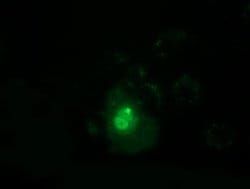
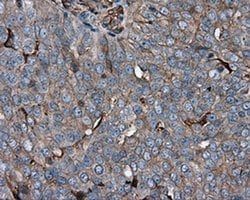
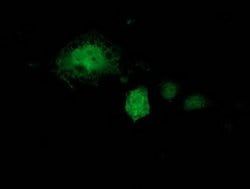
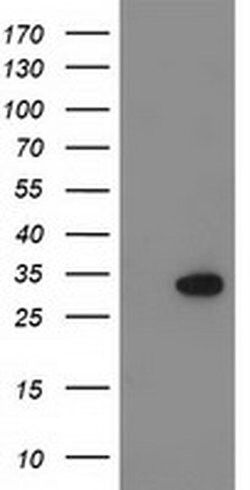
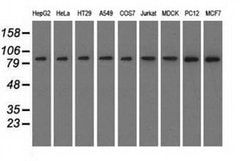
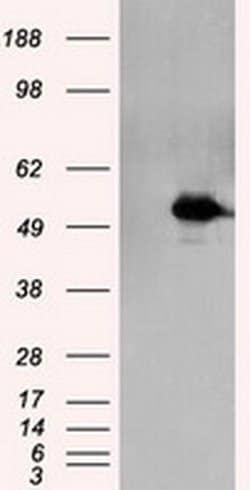
Flow Cytometry, Immunocytochemistry, Immunohistochemistry (Paraffin), Western Blot
Clone
OTI2B8
Conjugate
Unconjugated
Gene
Cdcp1
Gene Alias
9030022E12Rik; AA409659; CD318; CDCP1; CUB domain containing protein 1; CUB domain-containing protein 1; E030027H19Rik; gp140; Membrane glycoprotein gp140; RGD1305578; SIMA135; Subtractive immunization M plus HEp3-associated 135 kDa protein; transmembrane and associated with src kinases; TRASK; UNQ2486/PRO5773
Host Species
Mouse
Purification Method
Affinity Chromatography
Regulatory Status
RUO
Gene ID (Entrez)
64866
Content And Storage
-20° C, Avoid Freeze/Thaw Cycles
Form
Liquid
Related Products


Description
- CDCP1 is a transmembrane protein containing three extracellular CUB domains
- It is found to be overexpressed in colon and lung cancers
- Its expression level is correlated with the metastatic ability of carcinoma cells
- CDCP1 is located on the cell surface
- It has been shown to be tyrosine phosphorylated in a cancer cell line
- Alternatively spliced transcript variants encoding distinct isoforms have been reported.