PIMA525482
VASP Monoclonal Antibody (OTI4D6), Invitrogen™
Manufacturer: Thermo Scientific
Select a Size
| Pack Size | SKU | Availability | Price |
|---|---|---|---|
| Each of 1 | PIMA525482-Each-of-1 | In Stock | ₹ 52,376.50 |
PIMA525482 - Each of 1
In Stock
Quantity
1
Base Price: ₹ 52,376.50
GST (18%): ₹ 9,427.77
Total Price: ₹ 61,804.27
Antigen
VASP
Classification
Monoclonal
Concentration
1.0 mg/mL
Formulation
PBS with 1% BSA, 50% glycerol and 0.02% sodium azide; pH 7.3
Gene Accession No.
P50552
Gene Symbols
VASP
Immunogen
Full length human recombinant protein of VASP produced in 293T cell
Quantity
100μL
Primary or Secondary
Primary
Target Species
Human, Rat
Product Type
Antibody
Isotype
IgG1
Applications
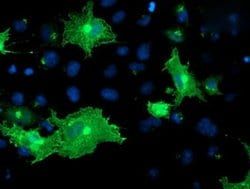
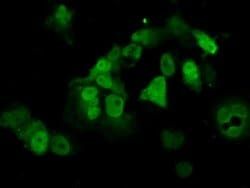
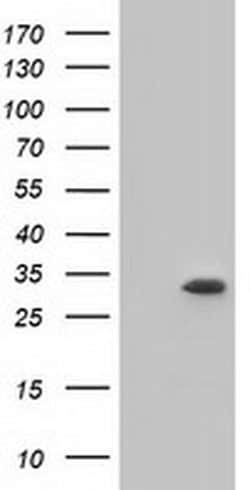
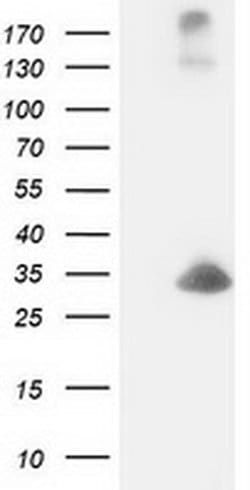
Flow Cytometry, Immunocytochemistry, Immunohistochemistry (Paraffin), Western Blot
Clone
OTI4D6
Conjugate
Unconjugated
Gene
VASP
Gene Alias
Enah/Vasp-like; I79_012660; Unknown (protein for MGC:127789); vasodilator stimulated phosphoprotein; vasodilator-stimulated phosphoprotein; vasodilator-stimulated phosphoprotein (VASP); VASP
Host Species
Mouse
Purification Method
Affinity Chromatography
Regulatory Status
RUO
Gene ID (Entrez)
361517, 7408
Content And Storage
-20° C, Avoid Freeze/Thaw Cycles
Form
Liquid
Related Products




Description
- Vasodilator-stimulated phosphoprotein (VASP) is a member of the Ena-VASP protein family
- Ena-VASP family members contain an EHV1 N-terminal domain that binds proteins containing E/DFPPPPXD/E motifs and targets Ena-VASP proteins to focal adhesions
- In the mid-region of the protein, family members have a proline-rich domain that binds SH3 and WW domain-containing proteins
- Their C-terminal EVH2 domain mediates tetramerization and binds both G and F actin
- VASP is associated with filamentous actin formation and likely plays a widespread role in cell adhesion and motility
- VASP may also be involved in the intracellular signaling pathways that regulate integrin-extracellular matrix interactions
- VASP is regulated by the cyclic nucleotide-dependent kinases PKA and PKG.