DPP3 Monoclonal Antibody (OTI2D9), Invitrogen™
Manufacturer: Thermo Scientific
Select a Size
| Pack Size | SKU | Availability | Price |
|---|---|---|---|
| Each of 1 | PIMA525629-Each-of-1 | In Stock | ₹ 52,198.50 |
PIMA525629 - Each of 1
In Stock
Quantity
1
Base Price: ₹ 52,198.50
GST (18%): ₹ 9,395.73
Total Price: ₹ 61,594.23
Antigen
DPP3
Classification
Monoclonal
Concentration
0.58 mg/mL
Formulation
PBS with 1% BSA, 50% glycerol and 0.02% sodium azide; pH 7.3
Gene Accession No.
Q9NY33
Gene Symbols
DPP3
Immunogen
Full length human recombinant protein of DPP3 produced in HEK293 cell
Quantity
100μL
Primary or Secondary
Primary
Target Species
Human
Product Type
Antibody
Isotype
IgG2b
Applications
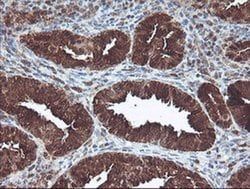
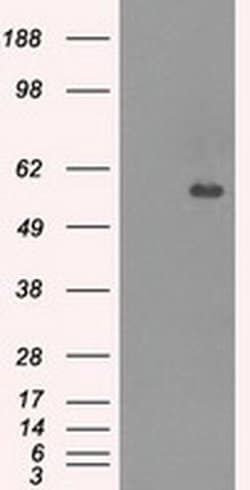
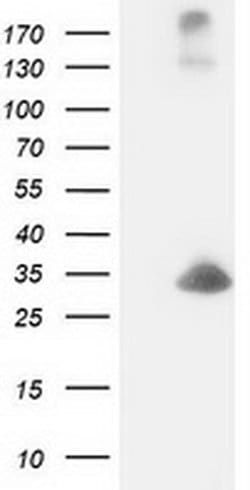
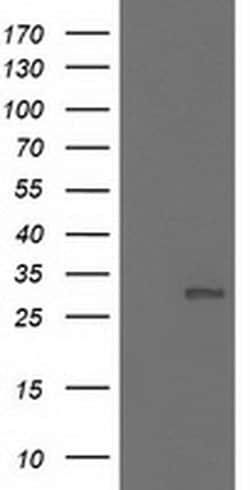
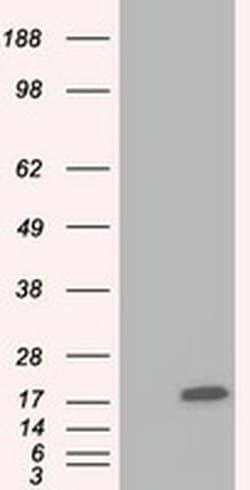
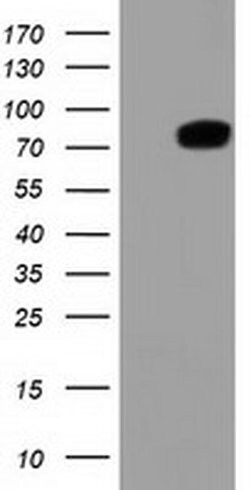
Flow Cytometry, Immunohistochemistry (Paraffin), Western Blot
Clone
OTI2D9
Conjugate
Unconjugated
Gene
DPP3
Gene Alias
4930533O14Rik; C86324; Dipeptidyl aminopeptidase III; dipeptidyl arylamidase III; Dipeptidyl peptidase 3; dipeptidyl peptidase III; dipeptidylpeptidase 3; dipeptidyl-peptidase 3; dipeptidylpeptidase III; dipeptidyl-peptidase III; DPP III; Dpp3; DPPIII; Enkephalinase B; hCG_2016942
Host Species
Mouse
Purification Method
Affinity Chromatography
Regulatory Status
RUO
Gene ID (Entrez)
10072
Content And Storage
-20° C, Avoid Freeze/Thaw Cycles
Form
Liquid
Related Products


Description
- This gene encodes a protein that is a member of the M49 family of metallopeptidases
- This cytoplasmic protein binds a single zinc ion with its zinc-binding motif (HELLGH) and has post-proline dipeptidyl aminopeptidase activity, cleaving Xaa-Pro dipeptides from the N-termini of proteins
- Increased activity of this protein is associated with endometrial and ovarian cancers
- Alternate transcriptional splice variants have been characterized.