PIMA526072
ALX4 Monoclonal Antibody (OTI6B3), Invitrogen™
Manufacturer: Thermo Scientific
Select a Size
| Pack Size | SKU | Availability | Price |
|---|---|---|---|
| Each of 1 | PIMA526072-Each-of-1 | In Stock | ₹ 52,198.50 |
PIMA526072 - Each of 1
In Stock
Quantity
1
Base Price: ₹ 52,198.50
GST (18%): ₹ 9,395.73
Total Price: ₹ 61,594.23
Antigen
ALX4
Classification
Monoclonal
Concentration
1 mg/mL
Formulation
PBS with 1% BSA, 50% glycerol and 0.02% sodium azide; pH 7.3
Gene Accession No.
Q9H161
Gene Symbols
ALX4
Immunogen
Full length human recombinant protein of ALX4 produced in HEK293T cell
Quantity
100μL
Primary or Secondary
Primary
Target Species
Human
Product Type
Antibody
Isotype
IgG1
Applications
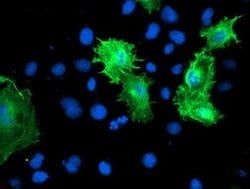
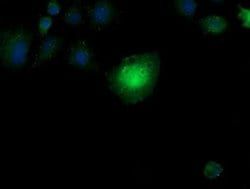
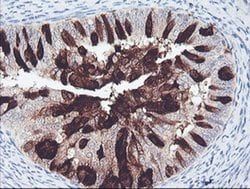
Immunocytochemistry, Immunohistochemistry (Paraffin), Western Blot
Clone
OTI6B3
Conjugate
Unconjugated
Gene
ALX4
Gene Alias
ALX homeobox 4; ALX4; ALX-4; aristaless 4; Aristaless-like 4; aristaless-like homeobox 4; CRS5; FND2; Homeobox protein aristaless-like 4; homeodomain transcription factor ALX4; KIAA1788; lst; Strong's luxoid
Host Species
Mouse
Purification Method
Affinity Chromatography
Regulatory Status
RUO
Gene ID (Entrez)
60529
Content And Storage
-20° C, Avoid Freeze/Thaw Cycles
Form
Liquid
Related Products



Description
- This gene encodes a paired-like homeodomain transcription factor expressed in the mesenchyme of developing bones, limbs, hair, teeth, and mammary tissue
- Mutations in this gene cause parietal foramina 2 (PFM2); an autosomal dominant disease characterized by deficient ossification of the parietal bones
- Mutations in this gene also cause a form of frontonasal dysplasia with alopecia and hypogonadism; suggesting a role for this gene in craniofacial development, mesenchymal-epithelial communication, and hair follicle development
- Deletion of a segment of chromosome 11 containing this gene, del(11)(p11p12), causes Potocki-Shaffer syndrome (PSS); a syndrome characterized by craniofacial anomalies, mental retardation, multiple exostoses, and genital abnormalities in males
- In mouse, this gene has been shown to use dual translation initiation sites located 16 codons apart.