PIMA526298
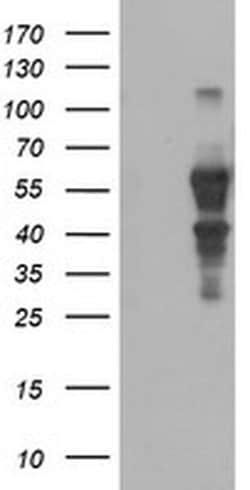
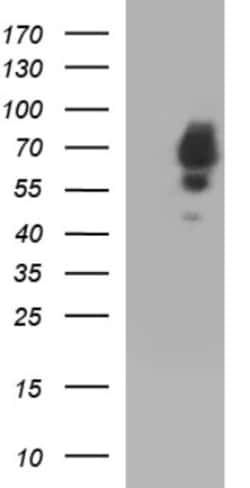
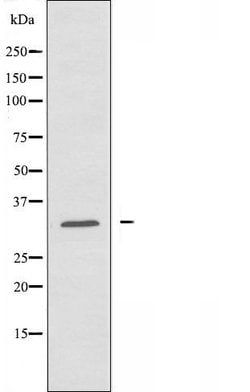
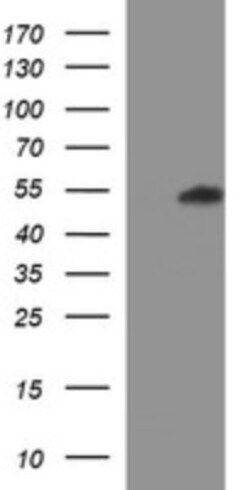
SCAMP2 Monoclonal Antibody (OTI2F1), Invitrogen™
Manufacturer: Thermo Scientific
Select a Size
| Pack Size | SKU | Availability | Price |
|---|---|---|---|
| Each of 1 | PIMA526298-Each-of-1 | In Stock | ₹ 52,198.50 |
PIMA526298 - Each of 1
In Stock
Quantity
1
Base Price: ₹ 52,198.50
GST (18%): ₹ 9,395.73
Total Price: ₹ 61,594.23
Antigen
SCAMP2
Classification
Monoclonal
Concentration
1 mg/mL
Formulation
PBS with 1% BSA, 50% glycerol and 0.02% sodium azide; pH 7.3
Gene Accession No.
O15127
Gene Symbols
Scamp2
Immunogen
Full length human recombinant protein of SCAMP2 produced in HEK293T cell
Quantity
100μL
Primary or Secondary
Primary
Target Species
Human
Product Type
Antibody
Isotype
IgG1
Applications
Immunocytochemistry, Immunohistochemistry (Paraffin), Western Blot
Clone
OTI2F1
Conjugate
Unconjugated
Gene
Scamp2
Gene Alias
AI875466; I79_023583; Sc2; scamp 2; SCAMP2; Secretory carrier membrane protein 2; secretory carrier-associated membrane protein 2; testis secretory sperm-binding protein Li 219p
Host Species
Mouse
Purification Method
Affinity Chromatography
Regulatory Status
RUO
Gene ID (Entrez)
10066
Content And Storage
-20° C, Avoid Freeze/Thaw Cycles
Form
Liquid
Related Products
Description
- Secretory carrier membrane proteins (SCAMPs) are proteins that are components of post-Golgi membranes
- These proteins are implicated to function in membrane trafficking
- In fibroblasts, SCAMPs are concentrated in compartments that are involved in the recycling of cell surface receptors and endocytosis
- In neurons, SCAMPs are associated with synaptic vesicles, secretion granules and transporter vesicles
- SCAMPs are composed of four central transmembrane regions and a cytoplasmic tail
- Of the five known SCAMPs, SCAMPs 1-3 contain cytoplasmic N-terminal regions with NPF repeats
- NPF repeats are found to interact with EH domain proteins that function in budding of transport vesicles from the plasma membrane or the Golgi complex
- SCAMPs 4 and 5 lack the N-terminal NPF repeats
- SCAMPs 1-4 are all ubiquitously coexpressed while SCAMP 5 is only detectable in the brain
- Studies show that SCAMP 5 is expressed late in development which is coincident with expansion of mature synapses.