PHGDH Monoclonal Antibody (OTI9C2), Invitrogen™
Manufacturer: Thermo Scientific
Select a Size
| Pack Size | SKU | Availability | Price |
|---|---|---|---|
| Each of 1 | PIMA526820-Each-of-1 | In Stock | ₹ 52,198.50 |
PIMA526820 - Each of 1
In Stock
Quantity
1
Base Price: ₹ 52,198.50
GST (18%): ₹ 9,395.73
Total Price: ₹ 61,594.23
Antigen
PHGDH
Classification
Monoclonal
Concentration
1 mg/mL
Formulation
PBS with 1% BSA, 50% glycerol and 0.02% sodium azide; pH 7.3
Gene Accession No.
O08651, O43175, Q61753
Gene Symbols
PHGDH
Immunogen
Full length human recombinant protein of PHGDH produced in HEK293T cell
Quantity
100μL
Primary or Secondary
Primary
Target Species
Human, Mouse, Rat
Product Type
Antibody
Isotype
IgG1
Applications
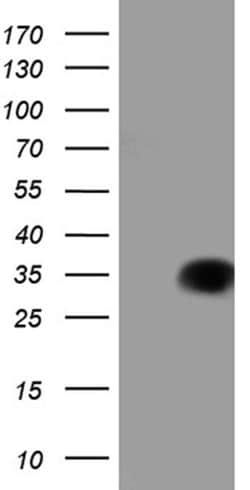
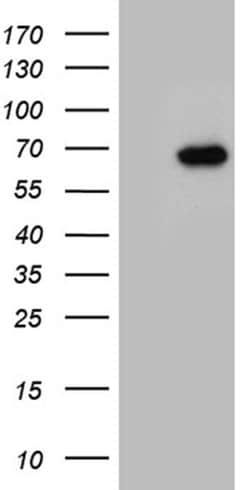
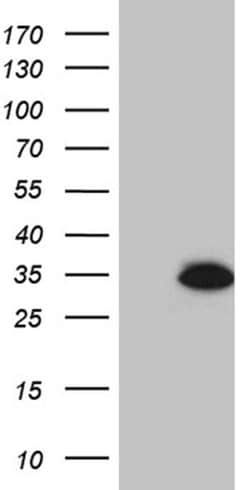
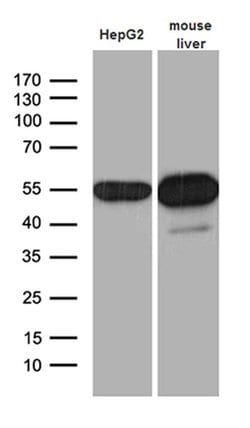
Immunohistochemistry (Paraffin), Western Blot
Clone
OTI9C2
Conjugate
Unconjugated
Gene
PHGDH
Gene Alias
2-oxoglutarate reductase; 3PGDH; 3-PGDH; 3-phosphoglycerate dehydrogenase; 3-phosphoglycerate dehyrogenase; 4930479N23; A10; D-3-phosphoglycerate dehydrogenase; epididymis secretory protein Li 113; HEL-S-113; Malate dehydrogenase; NLS; NLS1; PDG; PGAD; PGD; PGDH; PGDH3; Phgdh; PHGDHD; phosphoglycerate dehydrogenase; SERA
Host Species
Mouse
Purification Method
Affinity Chromatography
Regulatory Status
RUO
Gene ID (Entrez)
236539, 26227, 58835
Content And Storage
-20° C, Avoid Freeze/Thaw Cycles
Form
Liquid
Related Products
Description
- PHGDH gene encodes the enzyme which is involved in the early steps of L-serine synthesis in animal cells
- L-serine is required for D-serine and other amino acid synthesis
- The enzyme requires NAD/NADH as a cofactor and forms homotetramers for activity
- Mutations in this gene have been found in a family with congenital microcephaly, psychomotor retardation and other symptoms
- Multiple alternatively spliced transcript variants have been found, however the full-length nature of most are not known.