RPL10 Monoclonal Antibody (OTI6B11), Invitrogen™
Manufacturer: Thermo Scientific
Select a Size
| Pack Size | SKU | Availability | Price |
|---|---|---|---|
| Each of 1 | PIMA526901-Each-of-1 | In Stock | ₹ 52,198.50 |
PIMA526901 - Each of 1
In Stock
Quantity
1
Base Price: ₹ 52,198.50
GST (18%): ₹ 9,395.73
Total Price: ₹ 61,594.23
Antigen
RPL10
Classification
Monoclonal
Concentration
1 mg/mL
Formulation
PBS with 1% BSA, 50% glycerol and 0.02% sodium azide; pH 7.3
Gene Accession No.
P27635
Gene Symbols
Rpl10
Immunogen
Full length human recombinant protein of RPL10 produced in E.coli
Quantity
100μL
Primary or Secondary
Primary
Target Species
Human
Product Type
Antibody
Isotype
IgG2a
Applications
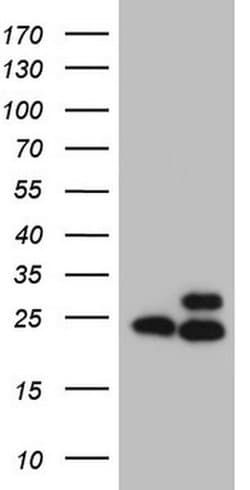
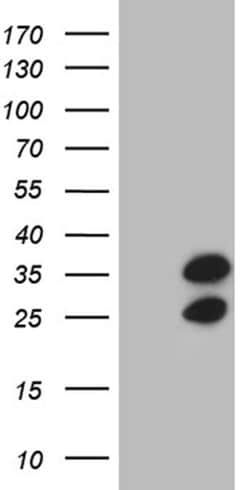
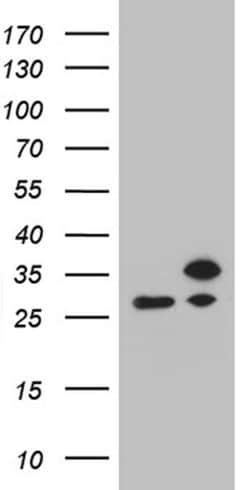
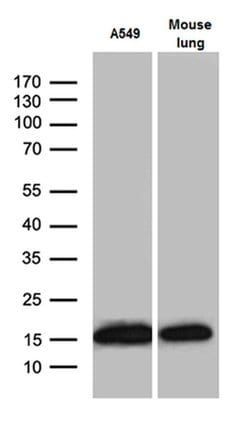
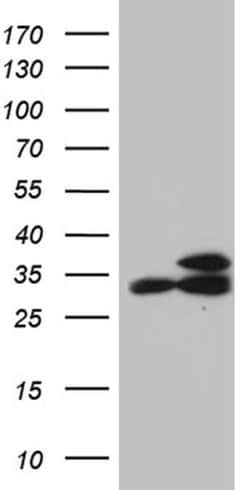
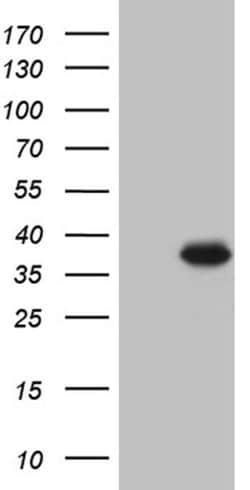
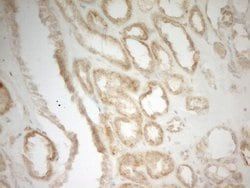
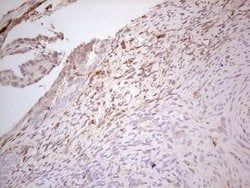
Immunohistochemistry (Paraffin), Western Blot
Clone
OTI6B11
Conjugate
Unconjugated
Gene
Rpl10
Gene Alias
24.6 kDa protein; 24.6kDa protein; 60S ribosomal protein L10; AUTSX5; D0HXS648; DXHXS648; DXHXS648E; DXS648; DXS648E; L10; Laminin receptor homolog; Large ribosomal subunit protein uL16; NOV; Protein QM; Protein QM homolog; QM; QM16; ribosomal protein 10; ribosomal protein L10; Rpl10; RPLPO; Tumor suppressor QM; Wilms tumor-related protein
Host Species
Mouse
Purification Method
Affinity Chromatography
Regulatory Status
RUO
Gene ID (Entrez)
6134
Content And Storage
-20° C, Avoid Freeze/Thaw Cycles
Form
Liquid
Related Products
Description
- This gene encodes a ribosomal protein that is a component of the 60S ribosome subunit
- The related protein in chicken can bind to c-Jun and can repress c-Jun-mediated transcriptional activation
- Some studies have detected an association between variation in this gene and autism spectrum disorders, though others do not detect this relationship
- There are multiple pseudogenes of this gene dispersed throughout the genome
- Alternative splicing results in multiple transcript variants.