ERLIN1 Monoclonal Antibody (OTI4C11), Invitrogen™
Manufacturer: Thermo Scientific
Select a Size
| Pack Size | SKU | Availability | Price |
|---|---|---|---|
| Each of 1 | PIMA527099-Each-of-1 | In Stock | ₹ 52,198.50 |
PIMA527099 - Each of 1
In Stock
Quantity
1
Base Price: ₹ 52,198.50
GST (18%): ₹ 9,395.73
Total Price: ₹ 61,594.23
Antigen
ERLIN1
Classification
Monoclonal
Concentration
1 mg/mL
Formulation
PBS with 1% BSA, 50% glycerol and 0.02% sodium azide; pH 7.3
Gene Accession No.
O75477
Gene Symbols
Erlin1
Immunogen
Human recombinant protein fragment corresponding to amino acids 107-346 of ERLIN1 produced in E.coli
Quantity
100μL
Primary or Secondary
Primary
Target Species
Human
Product Type
Antibody
Isotype
IgG1
Applications
Western Blot
Clone
OTI4C11
Conjugate
Unconjugated
Gene
Erlin1
Gene Alias
2810439N09Rik; Band_7 23-211 Keo4 (Interim) similar to C.elegans protein C42C1.9; C10orf69; C80197; endoplasmic reticulum lipid raft-associated protein 1; ER lipid raft associated 1; Erlin1; erlin-1; KE04; Keo4; OTTHUMP00000059425; OTTHUMP00000197867; Protein KE04; Protein KE04 homolog; RGD1307058; SPFH domain family, member 1; SPFH domain-containing protein 1; Spfh1; SPG62; stomatin-prohibitin-flotillin-HflC/K domain-containing protein 1
Host Species
Mouse
Purification Method
Affinity Chromatography
Regulatory Status
RUO
Gene ID (Entrez)
10613
Content And Storage
-20° C, Avoid Freeze/Thaw Cycles
Form
Liquid
Related Products
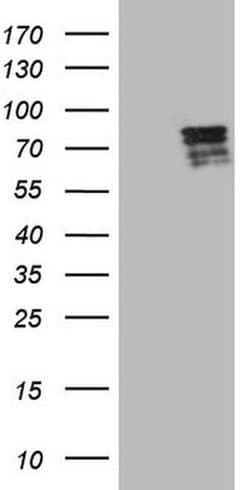
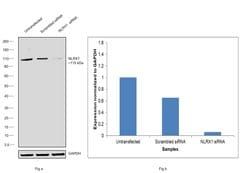
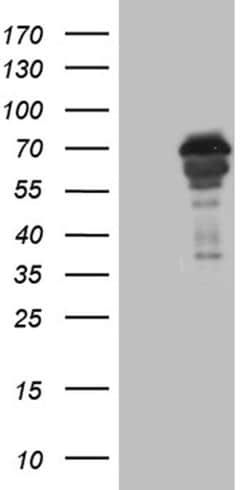
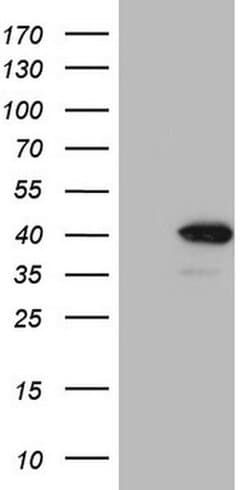
Description
- Component of the ERLIN1/ERLIN2 complex which mediates the endoplasmic reticulum-associated degradation (ERAD) of inositol 1,4,5-trisphosphate receptors (IP3Rs)
- Involved in regulation of cellular cholesterol homeostasis by regulation the SREBP signaling pathway
- Binds cholesterol and may promote ER retention of the SCAP-SREBF complex.