PIMA527174
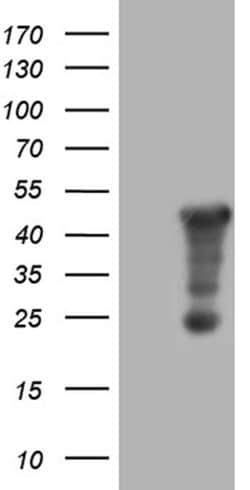
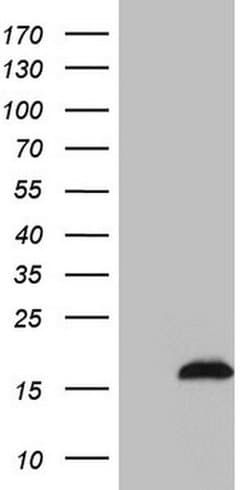
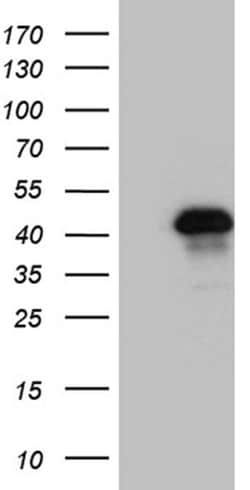
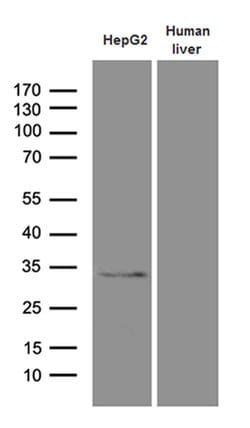
WDR92 Monoclonal Antibody (OTI2F2), Invitrogen™
Manufacturer: Thermo Scientific
Select a Size
| Pack Size | SKU | Availability | Price |
|---|---|---|---|
| Each of 1 | PIMA527174-Each-of-1 | In Stock | ₹ 52,198.50 |
PIMA527174 - Each of 1
In Stock
Quantity
1
Base Price: ₹ 52,198.50
GST (18%): ₹ 9,395.73
Total Price: ₹ 61,594.23
Antigen
WDR92
Classification
Monoclonal
Concentration
1 mg/mL
Formulation
PBS with 1% BSA, 50% glycerol and 0.02% sodium azide; pH 7.3
Gene Accession No.
Q96MX6
Gene Symbols
WDR92
Immunogen
Full length human recombinant protein of WDR92 produced in HEK293T cell
Quantity
100μL
Primary or Secondary
Primary
Target Species
Human
Product Type
Antibody
Isotype
IgG2b
Applications
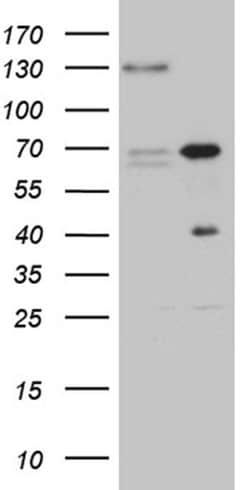
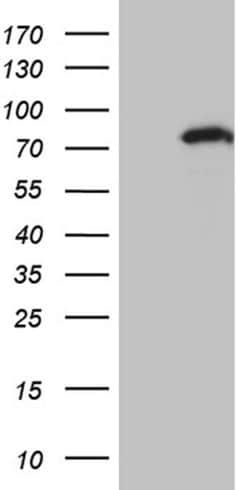
Western Blot
Clone
OTI2F2
Conjugate
Unconjugated
Gene
WDR92
Gene Alias
AI553587; HZGJ; monad; RGD1563863; testicular secretory protein Li 67; WD repeat domain 92; WD repeat-containing protein 92; WD repeat-containing protein Monad; Wdr92
Host Species
Mouse
Purification Method
Affinity Chromatography
Regulatory Status
RUO
Gene ID (Entrez)
116143
Content And Storage
-20° C, Avoid Freeze/Thaw Cycles
Form
Liquid
Related Products
Description
- WD40 repeats are a common structural module in eukaryotic proteins, and proteins containing WD40 domains have a wide range of functions, including signal transduction, cell cycle regulation, RNA splicing, and transcription
- One such protein, WDR92, also known as monad, contains two WD40 repeats is widely expressed in human tissues, especially testis
- Overexpression of this protein or its binding partner RNA polymerase II-associated protein 3 (RPAP3) potentiated apoptosis and caspase-3 activation induced by TNF-a and cycloheximide, suggesting that WDR92, together with RPAP3, may function as a novel modulator of apoptosis.