PIMA527184
ZNF329 Monoclonal Antibody (OTI2B11), Invitrogen™
Manufacturer: Thermo Scientific
Select a Size
| Pack Size | SKU | Availability | Price |
|---|---|---|---|
| Each of 1 | PIMA527184-Each-of-1 | In Stock | ₹ 52,198.50 |
PIMA527184 - Each of 1
In Stock
Quantity
1
Base Price: ₹ 52,198.50
GST (18%): ₹ 9,395.73
Total Price: ₹ 61,594.23
Antigen
ZNF329
Classification
Monoclonal
Concentration
1 mg/mL
Formulation
PBS with 1% BSA, 50% glycerol and 0.02% sodium azide; pH 7.3
Gene Accession No.
Q86UD4
Gene Symbols
ZNF329
Immunogen
Human recombinant protein fragment corresponding to amino acids 1-203 of ZNF329 produced in E.coli
Quantity
100μL
Primary or Secondary
Primary
Target Species
Human
Product Type
Antibody
Isotype
IgG1
Applications
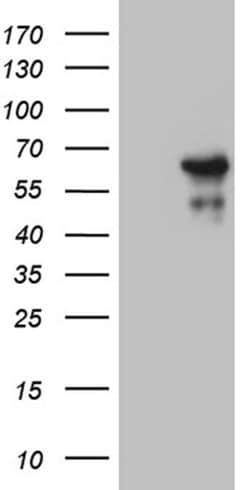
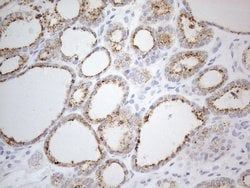
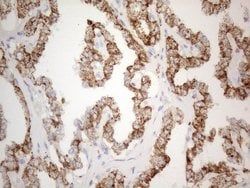
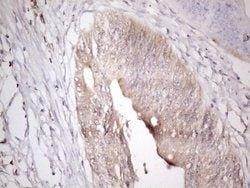
Immunohistochemistry (Paraffin), Western Blot
Clone
OTI2B11
Conjugate
Unconjugated
Gene
ZNF329
Gene Alias
2810439M05Rik; 4632409L22Rik; RGD1565029; Zfp329; Zinc finger protein 329; Znf329
Host Species
Mouse
Purification Method
Affinity Chromatography
Regulatory Status
RUO
Gene ID (Entrez)
79673
Content And Storage
-20° C, Avoid Freeze/Thaw Cycles
Form
Liquid
Related Products
Description
- Zinc finger proteins contain DNA-binding domains and have a wide variety of functions, most of which encompass some form of transcriptional activation or repression
- The majority of zinc finger proteins contain a Kruppeltype DNA binding domain and a KRAB domain, which is thought to interact with KAP1, thereby recruiting histone modifying proteins
- As a member of the Krueppel C2H2-type zinc finger protein family, ZNF329 (zinc finger protein 329) is a 541 amino acid nuclear protein that contains twelve C2H2-type zinc fingers through which it is thought to be involved in DNA-binding and transcriptional regulation.