PIMA527248
LSM11 Monoclonal Antibody (OTI7F12), Invitrogen™
Manufacturer: Thermo Scientific
Select a Size
| Pack Size | SKU | Availability | Price |
|---|---|---|---|
| Each of 1 | PIMA527248-Each-of-1 | In Stock | ₹ 52,198.50 |
PIMA527248 - Each of 1
In Stock
Quantity
1
Base Price: ₹ 52,198.50
GST (18%): ₹ 9,395.73
Total Price: ₹ 61,594.23
Antigen
LSM11
Classification
Monoclonal
Concentration
1 mg/mL
Formulation
PBS with 1% BSA, 50% glycerol and 0.02% sodium azide; pH 7.3
Gene Accession No.
P83369
Gene Symbols
LSM11
Immunogen
Full length human recombinant protein of LSM11 produced in E.coli
Quantity
100μL
Primary or Secondary
Primary
Target Species
Human
Product Type
Antibody
Isotype
IgG2a
Applications
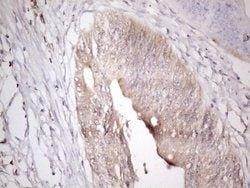
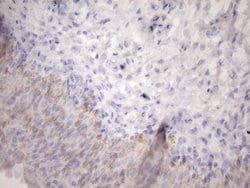
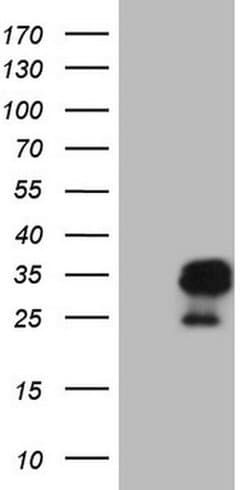
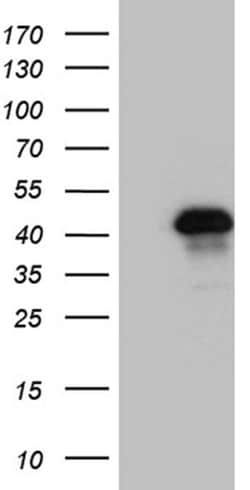
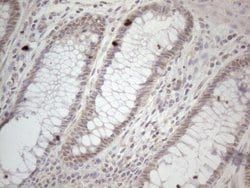
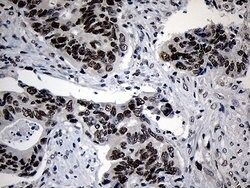
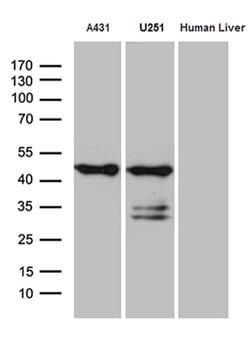
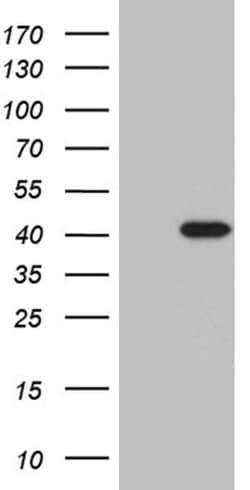
Immunohistochemistry (Paraffin), Western Blot
Clone
OTI7F12
Conjugate
Unconjugated
Gene
LSM11
Gene Alias
2210404M20Rik; AV079530; FLJ38273; Lsm11; LSM11, U7 small nuclear RNA associated; RGD1565523; U7 snRNA-associated Sm-like protein LSm11; U7 snRNP-specific Sm-like protein LSM11
Host Species
Mouse
Purification Method
Affinity Chromatography
Regulatory Status
RUO
Gene ID (Entrez)
134353
Content And Storage
-20° C, Avoid Freeze/Thaw Cycles
Form
Liquid
Related Products
Description
- LSm11 is a 360 amino acid protein that localizes to the nucleus and belongs to the LSm subfamily of snRNP Sm proteins
- Containing an N-terminal domain that is necessary for pre-mRNA cleavage, LSm11 functions to binds specifically to U7 snRNA and is thought to play a role in cell cycle regulation and cell growth
- The gene encoding LSm11 maps to human chromosome 5, which contains 181 million base pairs and comprises nearly 6% of the human genome
- Deletion of the p arm of chromosome 5 leads to Cri du chat syndrome, while deletion of the q arm or of chromosome 5 altogether is common in therapy-related acute myelogenous leukemias and myelodysplastic syndrome.