PIMA527349
F131C Monoclonal Antibody (OTI6E2), Invitrogen™
Manufacturer: Thermo Scientific
Select a Size
| Pack Size | SKU | Availability | Price |
|---|---|---|---|
| Each of 1 | PIMA527349-Each-of-1 | In Stock | ₹ 52,198.50 |
PIMA527349 - Each of 1
In Stock
Quantity
1
Base Price: ₹ 52,198.50
GST (18%): ₹ 9,395.73
Total Price: ₹ 61,594.23
Antigen
F131C
Classification
Monoclonal
Concentration
1 mg/mL
Formulation
PBS with 1% BSA, 50% glycerol and 0.02% sodium azide; pH 7.3
Gene Accession No.
Q96AQ9
Gene Symbols
FAM131C
Immunogen
Full length human recombinant protein of FAM131C produced in E.coli
Quantity
100μL
Primary or Secondary
Primary
Target Species
Human
Product Type
Antibody
Isotype
IgG1
Applications
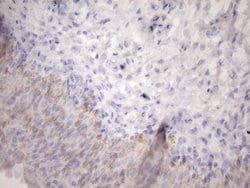
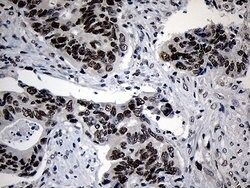
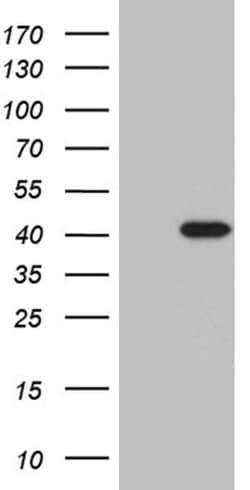
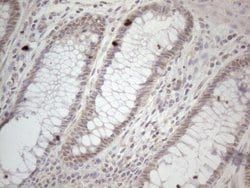
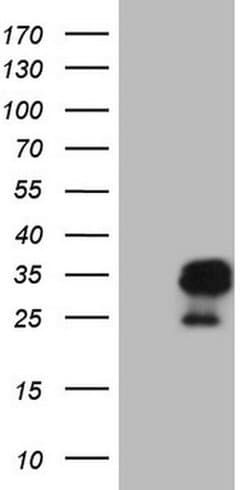
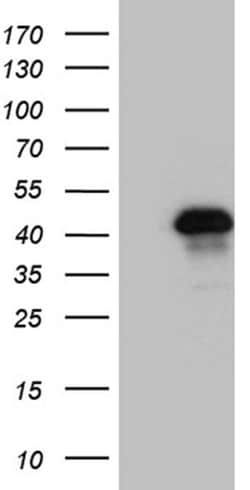
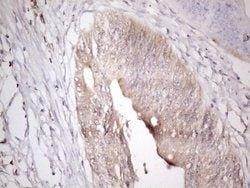
Immunohistochemistry (Paraffin), Western Blot
Clone
OTI6E2
Conjugate
Unconjugated
Gene
FAM131C
Gene Alias
C1orf117; FAM131C; family with sequence similarity 131 member C; family with sequence similarity 131, member C; Gm693; hypothetical protein LOC619198; protein FAM131C; RP11-5P18.9; zgc:110264
Host Species
Mouse
Purification Method
Affinity Chromatography
Regulatory Status
RUO
Gene ID (Entrez)
348487
Content And Storage
-20° C, Avoid Freeze/Thaw Cycles
Form
Liquid
Related Products
Description
- F131C gene encodes a member of the superoxide dismutase (SOD) protein family
- SODs are antioxidant enzymes that catalyze the conversion of superoxide radicals into hydrogen peroxide and oxygen, which may protect the brain, lungs, and other tissues from oxidative stress
- Proteolytic processing of the encoded protein results in the formation of two distinct homotetramers that differ in their ability to interact with the extracellular matrix (ECM)
- Homotetramers consisting of the intact protein, or type C subunit, exhibit high affinity for heparin and are anchored to the ECM
- Homotetramers consisting of a proteolytically cleaved form of the protein, or type A subunit, exhibit low affinity for heparin and do not interact with the ECM
- A mutation in this gene may be associated with increased heart disease risk.