P2X7 Monoclonal Antibody (7G1D6), Invitrogen™
Manufacturer: Thermo Scientific
Select a Size
| Pack Size | SKU | Availability | Price |
|---|---|---|---|
| Each of 1 | PIMA531813-Each-of-1 | In Stock | ₹ 49,884.50 |
PIMA531813 - Each of 1
In Stock
Quantity
1
Base Price: ₹ 49,884.50
GST (18%): ₹ 8,979.21
Total Price: ₹ 58,863.71
Antigen
P2X7
Classification
Monoclonal
Concentration
1 mg/mL
Formulation
PBS with 0.05% sodium azide
Gene Accession No.
Q99572, Q9Z1M0
Gene Symbols
P2RX7
Immunogen
Purified recombinant fragment of human P2RX7 (AA: 226-452) expressed in E. coli.
Quantity
100 μL
Primary or Secondary
Primary
Target Species
Human, Mouse
Product Type
Antibody
Isotype
IgG2b
Applications
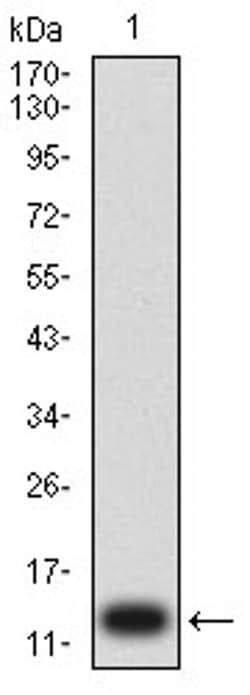
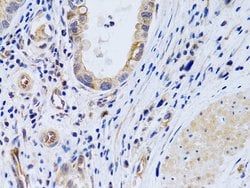
ELISA, Flow Cytometry, Immunohistochemistry (Paraffin), Western Blot
Clone
7G1D6
Conjugate
Unconjugated
Gene
P2RX7
Gene Alias
AI467586; ATP receptor; MGC20089; P2rx7; P2X purinoceptor 7; p2X receptor 7; P2X(7); P2X7; P2X7 purinoceptor; P2X7 receptor; P2X7R; P2Z; P2Z receptor; Purinergic receptor; purinergic receptor P2X 7; purinergic receptor P2X, ligand gated ion channel, 7; purinergic receptor P2X, ligand-gated ion channel, 7; purinergic receptor P2X7; purinergic receptor P2X7 variant A
Host Species
Mouse
Purification Method
Protein G
Regulatory Status
RUO
Gene ID (Entrez)
18439, 5027
Content And Storage
Store at 4°C short term. For long term storage, store at -20°C, avoiding freeze/thaw cycles.
Form
Liquid
Related Products

Description
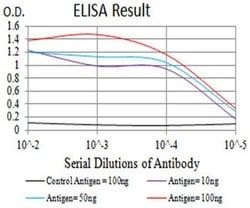
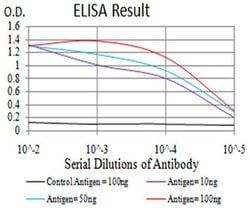
- MA5-31813 has been tested in indirect ELISA
- The product of this gene belongs to the family of purinoceptors for ATP
- This receptor functions as a ligand-gated ion channel and is responsible for ATP-dependent lysis of macrophages through the formation of membrane pores permeable to large molecules
- Activation of this nuclear receptor by ATP in the cytoplasm may be a mechanism by which cellular activity can be coupled to changes in gene expression
- Multiple alternatively spliced variants have been identified, most of which fit nonsense-mediated decay criteria.