GART Recombinant Rabbit Monoclonal Antibody (SC66-02), Invitrogen™
Manufacturer: Thermo Scientific
Select a Size
| Pack Size | SKU | Availability | Price |
|---|---|---|---|
| Each of 1 | PIMA532234-Each-of-1 | In Stock | ₹ 47,481.50 |
PIMA532234 - Each of 1
In Stock
Quantity
1
Base Price: ₹ 47,481.50
GST (18%): ₹ 8,546.67
Total Price: ₹ 56,028.17
Antigen
GART
Classification
Monoclonal
Concentration
1 mg/mL
Formulation
TBS with 0.05% BSA, 40% Glycerol and 0.05% sodium azide, pH 7.4
Gene Accession No.
P22102, Q64737
Gene Symbols
GART
Immunogen
Recombinant protein within Human GART aa 570-750
Quantity
100 μL
Primary or Secondary
Primary
Target Species
Human, Mouse, Rat
Product Type
Antibody
Isotype
IgG
Applications
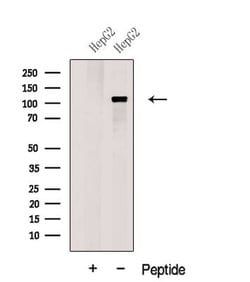
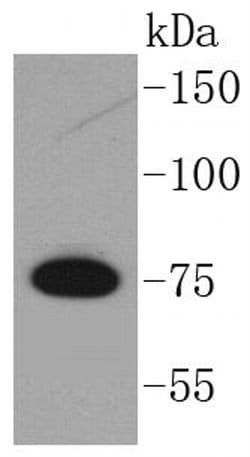
Immunocytochemistry, Immunohistochemistry, Western Blot, Western Blot
Clone
SC66-02
Conjugate
Unconjugated
Gene
GART
Gene Alias
5'-phosphoribosylglycinamide transformylase, AIR synthase, AIRS, Gaps, GAR transformylase, GARS, Gart, GARTF, glycinamide ribonucleotide formyltransferase, Glycinamide ribonucleotide synthetase, MGC47764, PAIS, PGFT, Phosphoribosylamine--glycine ligase, Phosphoribosyl-aminoimidazole synthetase, Phosphoribosylformylglycinamidine cyclo-ligase, Phosphoribosylglycinamide formyltransferase, phosphoribosylglycinamide formyltransferase, phosphoribosylglycinamide synthetase, phosphoribosylaminoimidazole synthetase, Phosphoribosylglycinamide synthetase, PRGS, Trifunctional purine biosynthetic protein adenosine-3, Trifunctional purine biosynthetic protein adenosine-3-like protein
Host Species
Rabbit
Purification Method
Protein A
Regulatory Status
RUO
Gene ID (Entrez)
14450, 2618, 288259
Content And Storage
Store at 4°C short term. For long term storage, store at -20°C, avoiding freeze/thaw cycles.
Form
Liquid
Related Products

Description
- Recombinant rabbit monoclonal antibodies are produced using in vitro expression systems
- The expression systems are developed by cloning in the specific antibody DNA sequences from immunoreactive rabbits
- Then, individual clones are screened to select the best candidates for production
- The advantages of using recombinant rabbit monoclonal antibodies include: better specificity and sensitivity, lot-to-lot consistency, animal origin-free formulations, and broader immunoreactivity to diverse targets due to larger rabbit immune repertoire
- MERTK is a receptor tyrosine kinase that transduces signals from the extracellular matrix into the cytoplasm by binding to several ligands including LGALS3, TUB, TULP1 or GAS6
- Regulates many physiological processes including cell survival, migration, differentiation, and phagocytosis of apoptotic cells (efferocytosis)
- Ligand binding at the cell surface induces autophosphorylation of MERTK on its intracellular domain that provides docking sites for downstream signaling molecules
- Following activation by ligand, interacts with GRB2 or PLCG2 and induces phosphorylation of MAPK1, MAPK2, FAK/PTK2 or RAC1
- MERTK signaling plays a role in various processes such as macrophage clearance of apoptotic cells, platelet aggregation, cytoskeleton reorganization and engulfment
- Functions in the retinal pigment epithelium (RPE) as a regulator of rod outer segments fragments phagocytosis
- Plays also an important role in inhibition of Toll-like receptors (TLRs)-mediated innate immune response by activating STAT1, which selectively induces production of suppressors of cytokine signaling SOCS1 and SOCS3.