Phospho-ATM (Ser1981) Recombinant Rabbit Monoclonal Antibody (JM93-25), Invitrogen™
Manufacturer: Thermo Scientific
Select a Size
| Pack Size | SKU | Availability | Price |
|---|---|---|---|
| Each of 1 | PIMA532751-Each-of-1 | In Stock | ₹ 47,837.50 |
PIMA532751 - Each of 1
In Stock
Quantity
1
Base Price: ₹ 47,837.50
GST (18%): ₹ 8,610.75
Total Price: ₹ 56,448.25
Antigen
Phospho-ATM (Ser1981)
Classification
Monoclonal
Concentration
1 mg/mL
Formulation
TBS with 0.05% BSA, 40% Glycerol and 0.05% sodium azide, pH 7.4
Gene Accession No.
Q13315, Q62388
Gene Symbols
ATM
Immunogen
Synthetic phospho-peptide corresponding to residues surrounding Ser1981 of Human ATM aa 1940-1989
Quantity
100 μL
Primary or Secondary
Primary
Target Species
Human, Mouse
Product Type
Antibody
Isotype
IgG
Applications
Immunocytochemistry, Immunohistochemistry, Western Blot, Western Blot
Clone
JM93-25
Conjugate
Unconjugated
Gene
ATM
Gene Alias
AI256621, AT mutated, A-T mutated, A-T mutated homolog, AT mutated protein, AT1, ATA, Ataxia t, Ataxia telangiectasia gene mutated in human beings, ataxia telangiectasia mutated, Ataxia telangiectasia mutated homolog, ATC, ATD, ATDC, ATE, Atm, ATM (phospho S1981), ATM (pS1981), ATM (pSer1981), ATM phospho S1981, ATM phospho Ser1981, ATM serine/threonine kinase, C030026E19Rik, DKFZp781A0353, EC 2.7.1.37, MGC74674, phospho ATM, phospho S1981 ATM, serine-protein kinase ATM, TEL1, TEL1, telomere maintenance 1, homolog, TELO1
Host Species
Rabbit
Purification Method
Protein A
Regulatory Status
RUO
Gene ID (Entrez)
11920, 472
Content And Storage
Store at 4°C short term. For long term storage, store at -20°C, avoiding freeze/thaw cycles.
Form
Liquid
Related Products
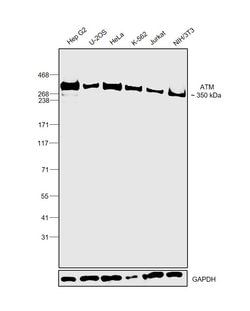
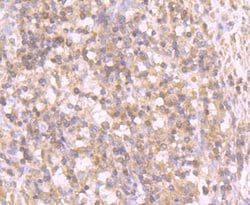
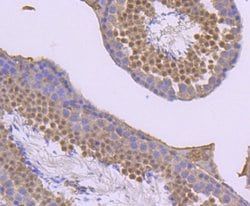
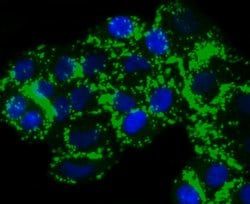
Description
- Recombinant rabbit monoclonal antibodies are produced using in vitro expression systems
- The expression systems are developed by cloning in the specific antibody DNA sequences from immunoreactive rabbits
- Then, individual clones are screened to select the best candidates for production
- The advantages of using recombinant rabbit monoclonal antibodies include: better specificity and sensitivity, lot-to-lot consistency, animal origin-free formulations, and broader immunoreactivity to diverse targets due to larger rabbit immune repertoire
- Ataxia-telangiectasia Mutated (ATM) is a protein that belongs to the PI3/PI4 kinase family
- Ataxia-telangiectasia is a rare autosomal recessive disorder characterized by progressive neurologic degeneration, immunologic deficiency, and an increased risk of lymphoid cancer
- The ATM gene codes for a protein belonging to the phosphoinositide 3-kinase (PI3K) superfamily
- ATM phosphorylates proteins instead of lipid and has many downstream targets that act as cell-cycle regulators including: P53, Mdm2, BRCA1, and SMC1
- The ATM protein is responsible for repairing double-stranded DNA breaks that occur because of ionizing radiation and other mutagens
- The ATM’s C-terminal region has extensive homology to the catalytic domains of phosphatidylinositol 3-kinases (PI3 kinases)
- Studies have shown that ATM becomes autophosphorylated and upregulated by exposure to ionizing radiation
- AT cells are hypersensitive to ionizing radiation, impaired in mediating the inhibition of DNA synthesis and display delays in p53 induction
- Further, DNA damage caused by ionizing irradiation activates ATM-kinase, leading to a cascade of kinase reactions that regulate cell cycle, apoptosis, and DNA damage repair
- Studies have linked ATM to apoptosis along with Nbs1 and Chk2 in the E2F1 pathway.