GADD34 Monoclonal Antibody (A4D7), Invitrogen™
Manufacturer: Thermo Scientific
Select a Size
| Pack Size | SKU | Availability | Price |
|---|---|---|---|
| Each of 1 | PIMA536129-Each-of-1 | In Stock | ₹ 47,481.50 |
PIMA536129 - Each of 1
In Stock
Quantity
1
Base Price: ₹ 47,481.50
GST (18%): ₹ 8,546.67
Total Price: ₹ 56,028.17
Antigen
GADD34
Classification
Monoclonal
Concentration
2 mg/mL
Formulation
PBS with 0.2% BSA, 50% glycerol and 0.05% sodium azide; pH 7.4
Gene Accession No.
O75807
Gene Symbols
PPP1R15A
Immunogen
Synthetic peptide within Human GADD34 aa 1-50
Quantity
100 μL
Primary or Secondary
Primary
Target Species
Human
Product Type
Antibody
Isotype
IgG1
Applications
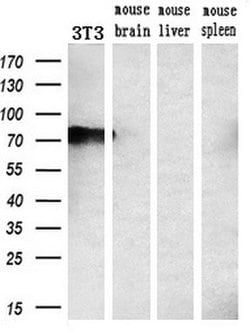
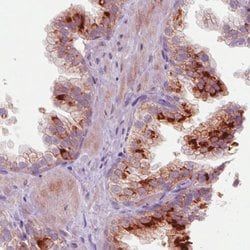
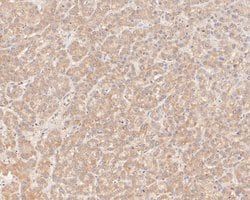
Flow Cytometry, Immunohistochemistry (Paraffin), Western Blot
Clone
A4D7
Conjugate
Unconjugated
Gene
PPP1R15A
Gene Alias
9630030H21; Gadd34; growth arrest and DNA damage-inducible protein GADD34; growth arrest and DNA-damage-inducible 34; Myd116; myeloid differentiation primary response gene 116; myeloid differentiation primary response protein MyD116; Myeloid differentiation primary response protein MyD116 homolog; Peg3; PEG-3; PPP1R15A; PR15A; Progression elevated gene 3 protein; protein phosphatase 1 regulatory subunit 15A; protein phosphatase 1, regulatory (inhibitor) subunit 15A; protein phosphatase 1, regulatory subunit 15A; RGD1624209
Host Species
Mouse
Purification Method
Antigen affinity chromatography
Regulatory Status
RUO
Gene ID (Entrez)
23645
Content And Storage
Store at 4°C short term. For long term storage, store at -20°C, avoiding freeze/thaw cycles.
Form
Liquid
Related Products

Description
- This gene is a member of a group of genes whose transcript levels are increased following stressful growth arrest conditions and treatment with DNA-damaging agents
- The induction of this gene by ionizing radiation occurs in certain cell lines regardless of p53 status, and its protein response is correlated with apoptosis following ionizing radiation.