COL8A1 Monoclonal Antibody (C3), Invitrogen™
Manufacturer: Thermo Scientific
Select a Size
| Pack Size | SKU | Availability | Price |
|---|---|---|---|
| Each of 1 | PIMA541571-Each-of-1 | In Stock | ₹ 45,790.50 |
PIMA541571 - Each of 1
In Stock
Quantity
1
Base Price: ₹ 45,790.50
GST (18%): ₹ 8,242.29
Total Price: ₹ 54,032.79
Antigen
COL8A1
Classification
Monoclonal
Concentration
1 mg/mL
Formulation
PBS with 50% glycerol and 0.05% ProClin 300
Gene Accession No.
P27658
Gene Symbols
COL8A1
Immunogen
Recombinant protein Collagen Type VIII Alpha 1. The antigen corresponds to amino acid range 575-743 of the target protein.
Quantity
200 μL
Primary or Secondary
Primary
Target Species
Human
Product Type
Antibody
Isotype
IgG2a κ
Applications
Western Blot
Clone
C3
Conjugate
Unconjugated
Gene
COL8A1
Gene Alias
C3orf7; cell proliferation-inducing protein 41; Col8a1; Col8a-1; Collagen alpha-1(VIII) chain; collagen type VIII alpha 1; collagen VIII, alpha-1 polypeptide; collagen, type VIII, alpha 1; endothelial collagen; procollagen type VIII alpha 1; procollagen, type VIII, alpha 1; smag-64; smooth muscle cell-expressed and macrophage conditioned medium-induced protein smag-64; Vastatin
Host Species
Mouse
Purification Method
Protein A/G
Regulatory Status
RUO
Gene ID (Entrez)
1295
Content And Storage
-20°C
Form
Liquid
Related Products
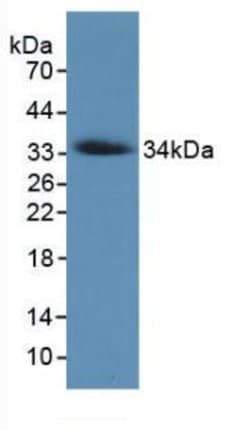
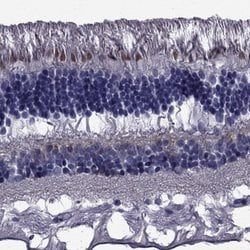
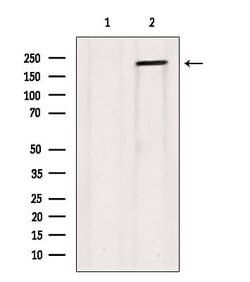
Description
- The extensive family of COL gene products (collagens) is composed of several chain types, including fibril-forming interstitial collagens (types I, II, III and V) and basement membrane collagens (type IV), each type containing multiple isoforms
- Collagens are fibrous, extracellular matrix proteins with high tensile strength and are the major components of connective tissue, such as tendons and cartilage
- All collagens contain a triple helix domain and frequently show lateral self-association in order to form complex connective tissues
- Several collagens also play a role in cell adhesion, important for maintaining normal tissue architecture and function.