ALDH16A1 Recombinant Rabbit Monoclonal Antibody (JE62-68), Invitrogen™
Manufacturer: Thermo Scientific
Select a Size
| Pack Size | SKU | Availability | Price |
|---|---|---|---|
| Each of 1 | PIMA544816-Each-of-1 | In Stock | ₹ 42,720.00 |
PIMA544816 - Each of 1
In Stock
Quantity
1
Base Price: ₹ 42,720.00
GST (18%): ₹ 7,689.60
Total Price: ₹ 50,409.60
Antigen
ALDH16A1
Classification
Recombinant Monoclonal
Concentration
1 mg/mL
Formulation
TBS with 0.05% BSA, 40% glycerol and 0.05% sodium azide; pH 7.4
Gene Accession No.
Q3T1L0, Q571I9, Q8IZ83
Gene Symbols
ALDH16A1
Immunogen
Synthetic peptide within human ALDH16A1 aa 550-600/802.
Quantity
100 μL
Primary or Secondary
Primary
Target Species
Human, Mouse, Rat
Form
Liquid
Applications
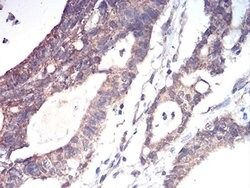
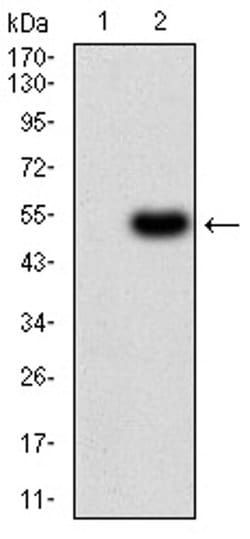
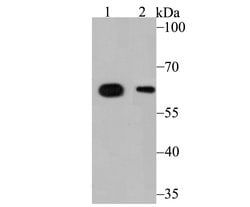
Immunohistochemistry (Paraffin), Western Blot
Clone
JE62-68
Conjugate
Unconjugated
Gene
ALDH16A1
Gene Alias
2410004H02Rik; AI452234; aldehyde dehydrogenase 16 family member A1; aldehyde dehydrogenase 16 family, member A1; aldehyde dehydrogenase 16A1; aldehyde dehydrogenase family 16 member A1; ALDH16A1; LOW QUALITY PROTEIN: aldehyde dehydrogenase family 16 member A1; mFLJ00209
Host Species
Rabbit
Purification Method
Protein A
Regulatory Status
RUO
Gene ID (Entrez)
126133, 361571, 69748
Content And Storage
Store at 4°C short term. For long term storage, store at -20°C, avoiding freeze/thaw cycles.
Isotype
IgG
Related Products


Description
- This gene encodes a member of the aldehyde dehydrogenase superfamily
- The family members act on aldehyde substrates and use nicotinamide adenine dinucleotide phosphate (NADP) as a cofactor
- This gene is conserved in chimpanzee, dog, cow, mouse, rat, and zebrafish
- The protein encoded by this gene interacts with maspardin, a protein that when truncated is responsible for Mast syndrome
- Alternatively spliced transcript variants encoding different isoforms have been found for this gene.