NPEPPS Recombinant Rabbit Monoclonal Antibody (HL1531), Invitrogen™
Manufacturer: Thermo Scientific
Select a Size
| Pack Size | SKU | Availability | Price |
|---|---|---|---|
| Each of 1 | PIMA547084-Each-of-1 | In Stock | ₹ 40,317.00 |
PIMA547084 - Each of 1
In Stock
Quantity
1
Base Price: ₹ 40,317.00
GST (18%): ₹ 7,257.06
Total Price: ₹ 47,574.06
Antigen
NPEPPS
Classification
Monoclonal
Concentration
1 mg/mL
Formulation
PBS with no preservative
Gene Accession No.
P55786, Q11011
Gene Symbols
NPEPPS
Immunogen
Recombinant protein encompassing a sequence within the center region of human NPEPPS. The exact sequence is proprietary.
Quantity
100 μL
Primary or Secondary
Primary
Target Species
Canine, Feline, Human, Mouse, Rat, Zebrafish
Product Type
Antibody
Isotype
IgG
Applications
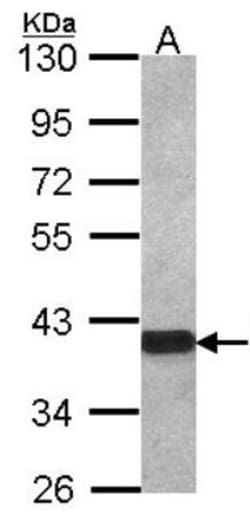
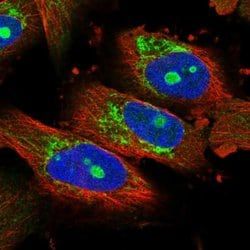
Immunocytochemistry, Immunohistochemistry (Paraffin), Western Blot
Clone
HL1531
Conjugate
Unconjugated
Gene
NPEPPS
Gene Alias
AAP-S; aminopeptidase puromycin sensitive; cytosol alanyl aminopeptidase; goku; metalloproteinase MP100; MP100; NPEPPS; Psa; Puromycin-sensitive aminopeptidase; R74825
Host Species
Rabbit
Purification Method
Protein A
Regulatory Status
RUO
Gene ID (Entrez)
101098097, 19155, 407726, 480538, 50558, 9520
Content And Storage
Store at 4°C short term. For long term storage, store at -20°C, avoiding freeze/thaw cycles.
Form
Liquid
Related Products

Description
- Store as concentrated solution
- Centrifuge briefly prior to opening vial
- This gene encodes the puromycin-sensitive aminopeptidase, a zinc metallopeptidase which hydrolyzes amino acids from the N-terminus of its substrate
- The protein has been localized to both the cytoplasm and to cellular membranes
- This enzyme degrades enkaphalins in the brain, and studies in mouse suggest that it is involved in proteolytic events regulating the cell cycle.