PIPA132531
Opsin 3 Polyclonal Antibody, Invitrogen™
Manufacturer: Thermo Scientific
Select a Size
| Pack Size | SKU | Availability | Price |
|---|---|---|---|
| Each of 1 | PIPA132531-Each-of-1 | In Stock | ₹ 48,905.50 |
PIPA132531 - Each of 1
In Stock
Quantity
1
Base Price: ₹ 48,905.50
GST (18%): ₹ 8,802.99
Total Price: ₹ 57,708.49
Antigen
Opsin 3
Classification
Polyclonal
Conjugate
Unconjugated
Gene
Opn3
Gene Alias
ECPN; Encephalopsin; ERO; NMO-1; Opn3; opsin (encephalopsin); opsin 3; opsin 3 (encephalopsin, panopsin); opsin-3; Panopsin; PPP1R116; protein phosphatase 1, regulatory subunit 116
Host Species
Rabbit
Purification Method
Antigen affinity chromatography
Regulatory Status
RUO
Gene ID (Entrez)
23596
Content And Storage
Store at 4°C short term. For long term storage, store at -20°C, avoiding freeze/thaw cycles.
Form
Liquid
Applications
Immunohistochemistry (Paraffin)
Concentration
1 mg/mL
Formulation
PBS with 0.1% sodium azide
Gene Accession No.
Q9H1Y3
Gene Symbols
Opn3
Immunogen
Synthetic 19 amino acid peptide from C-terminus of human Opsin 3
Quantity
25 μg
Primary or Secondary
Primary
Target Species
Human
Product Type
Antibody
Isotype
IgG
Related Products
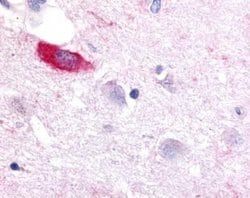
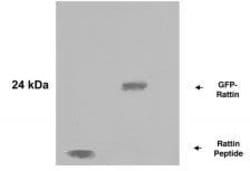
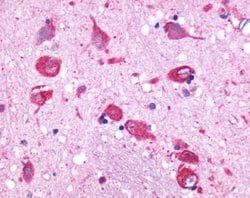
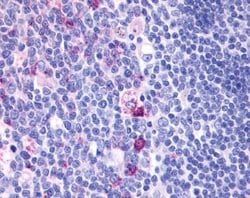
Description
- Description PA1-32531 detects Encephalopsin from human samples
- Opsins are members of the guanine nucleotide-binding protein (G protein)-coupled receptor superfamily
- In addition to the visual opsins, mammals possess several photoreceptive non-visual opsins that are expressed in extraocular tissues
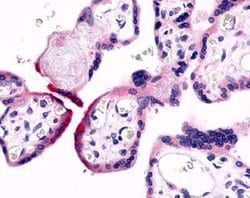
- This gene, opsin 3, is strongly expressed in brain and testis and weakly expressed in liver, placenta, heart, lung, skeletal muscle, kidney, and pancreas
- The gene may also be expressed in the retina
- The protein has the canonical features of a photoreceptive opsin protein
- May play a role in encephalic photoreception
- Strongly expressed in brain
- Highly expressed in the preoptic area and paraventricular nucleus of the hypothalamus
- Shows highly patterned expression in other regions of the brain, being enriched in selected regions of the cerebral cortex, cerebellar Purkinje cells, a subset of striatal neurons, selected thalamic nuclei, and a subset of interneurons in the ventral horn of the spinal cord.