CCR10 Polyclonal Antibody, Invitrogen™
Manufacturer: Thermo Scientific
Select a Size
| Pack Size | SKU | Availability | Price |
|---|---|---|---|
| Each of 1 | PIPA132571-Each-of-1 | In Stock | ₹ 46,591.50 |
PIPA132571 - Each of 1
In Stock
Quantity
1
Base Price: ₹ 46,591.50
GST (18%): ₹ 8,386.47
Total Price: ₹ 54,977.97
Antigen
CCR10
Classification
Polyclonal
Conjugate
Unconjugated
Gene
CCR10
Gene Alias
CC chemokine receptor 10; C-C chemokine receptor type 10; C-C CKR-10; C-C motif chemokine receptor 10; CC-CKR-10; CCR10; CCR-10; chemokine (C-C motif) receptor 10; chemokine C-C receptor 9; Cmkbr9; G protein-coupled receptor 2; Gpr2; G-protein coupled receptor 2; MGC151420; RP23-281C18.3
Host Species
Rabbit
Purification Method
Antigen affinity chromatography
Regulatory Status
RUO
Gene ID (Entrez)
2826
Content And Storage
Store at 4°C short term. For long term storage, store at -20°C, avoiding freeze/thaw cycles.
Form
Liquid
Applications
Immunohistochemistry (Paraffin)
Concentration
1 mg/mL
Formulation
PBS with 0.1% sodium azide
Gene Accession No.
P46092
Gene Symbols
CCR10
Immunogen
Synthetic 19 amino acid peptide from C-terminus of human CCR10
Quantity
25 μg
Primary or Secondary
Primary
Target Species
Human
Product Type
Antibody
Isotype
IgG
Related Products

Description
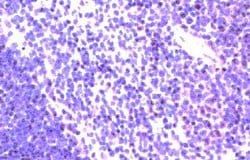
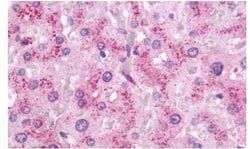
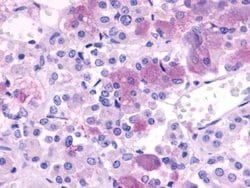
- PA1-32571 detects GPCR GPR2/CCR10 from human samples
- Chemokines are a group of small (approximately 8 to 14 kD), mostly basic, structurally related molecules that regulate cell trafficking of various types of leukocytes through interactions with a subset of 7-transmembrane, G protein-coupled receptors
- Chemokines also play fundamental roles in the development, homeostasis, and function of the immune system, and they have effects on cells of the central nervous system as well as on endothelial cells involved in angiogenesis or angiostasis
- Chemokines are divided into 2 major subfamilies, CXC and CC, based on the arrangement of the first 2 of the 4 conserved cysteine residues; the 2 cysteines are separated by a single amino acid in CXC chemokines and are adjacent in CC chemokines
- CCR10 is the receptor for CCL27; CCR10-CCL27 interactions are involved in T cell-mediated skin inflammation.