PIPA5100106
MPZL2 Polyclonal Antibody, Invitrogen™
Manufacturer: Thermo Scientific
Select a Size
| Pack Size | SKU | Availability | Price |
|---|---|---|---|
| Each of 1 | PIPA5100106-Each-of-1 | In Stock | ₹ 46,502.50 |
PIPA5100106 - Each of 1
In Stock
Quantity
1
Base Price: ₹ 46,502.50
GST (18%): ₹ 8,370.45
Total Price: ₹ 54,872.95
Antigen
MPZL2
Classification
Polyclonal
Conjugate
Unconjugated
Gene
Mpzl2
Gene Alias
epithelial V-like antigen 1; EVA; Eva1; MPZL2; myelin protein zero like 2; myelin protein zero-like 2; myelin protein zero-like protein 2; UNQ606/PRO1192
Host Species
Rabbit
Purification Method
Affinity chromatography
Regulatory Status
RUO
Gene ID (Entrez)
10205, 14012, 300679
Content And Storage
-20°C
Form
Liquid
Applications
Immunohistochemistry (Paraffin), Western Blot
Concentration
1 mg/mL
Formulation
PBS with 50% glycerol and 0.02% sodium azide; pH 7.4
Gene Accession No.
O60487, O70255
Gene Symbols
Mpzl2
Immunogen
A synthesized peptide derived from human MPZL2(Accession O60487), corresponding to amino acid residues R90-L140.
Quantity
100 μL
Primary or Secondary
Primary
Target Species
Human, Mouse, Rat
Product Type
Antibody
Isotype
IgG
Related Products

Description
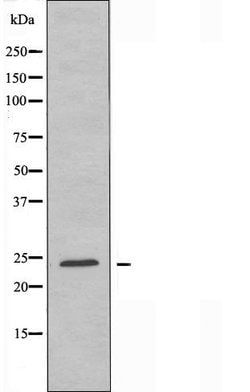
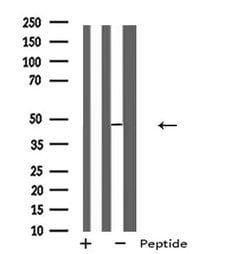
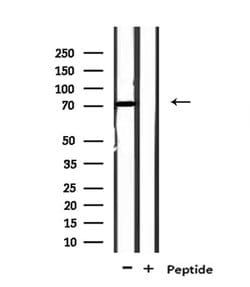
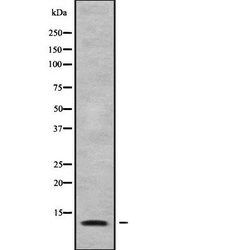
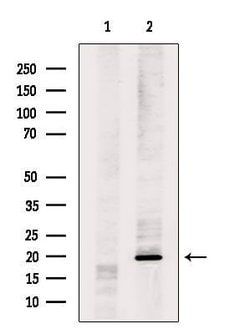
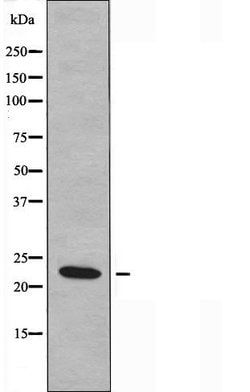
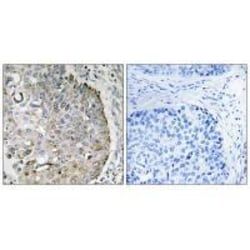
- Antibody detects endogenous levels of total MPZL2
- Thymus development depends on a complex series of interactions between thymocytes and the stromal component of the organ
- Epithelial V-like antigen (EVA) is expressed in thymus epithelium and strongly downregulated by thymocyte developmental progression
- This gene is expressed in the thymus and in several epithelial structures early in embryogenesis
- It is highly homologous to the myelin protein zero and, in thymus-derived epithelial cell lines, is poorly soluble in nonionic detergents, strongly suggesting an association to the cytoskeleton
- Its capacity to mediate cell adhesion through a homophilic interaction and its selective regulation by T cell maturation might imply the participation of EVA in the earliest phases of thymus organogenesis
- The protein bears a characteristic V-type domain and two potential N-glycosylation sites in the extracellular domain; a putative serine phosphorylation site for casein kinase 2 is also present in the cytoplasmic tail
- Two transcript variants encoding the same protein have been found for this gene.