ID3 Polyclonal Antibody, Invitrogen™
Manufacturer: Thermo Scientific
Select a Size
| Pack Size | SKU | Availability | Price |
|---|---|---|---|
| Each of 1 | PIPA5100197-Each-of-1 | In Stock | ₹ 46,502.50 |
PIPA5100197 - Each of 1
In Stock
Quantity
1
Base Price: ₹ 46,502.50
GST (18%): ₹ 8,370.45
Total Price: ₹ 54,872.95
Antigen
ID3
Classification
Polyclonal
Conjugate
Unconjugated
Gene
Id3
Gene Alias
1R21; bHLHb25; class B basic helix-loop-helix protein 25; DNA-binding protein inhibitor ID-3; HEIR 1; HEIR1; HEIR-1; Helix-loop-helix protein HEIR-1; Hlh462; HLH642; ID 3; Id3; Id-3; Idb3; ID-like protein inhibitor HLH 1R21; ID-like protein inhibitor HLH 462; Inhibitor of differentiation 3; inhibitor of DNA binding 3; inhibitor of DNA binding 3, dominant negative helix-loop-helix protein; inhibitor of DNA binding 3, HLH protein
Host Species
Rabbit
Purification Method
Affinity chromatography
Regulatory Status
RUO
Gene ID (Entrez)
15903, 25585, 3399
Content And Storage
-20°C
Form
Liquid
Applications
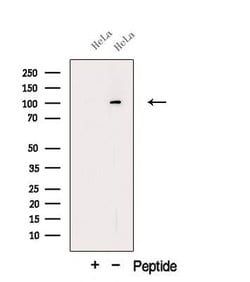
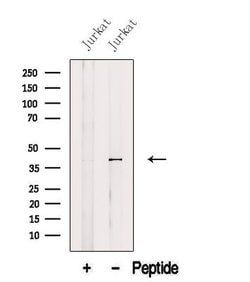
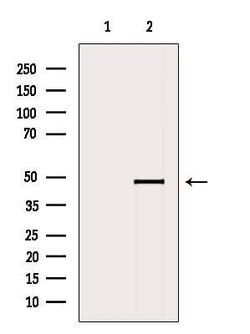
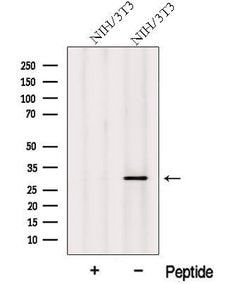
Western Blot
Concentration
1 mg/mL
Formulation
PBS with 50% glycerol and 0.02% sodium azide; pH 7.4
Gene Accession No.
P41133, P41138, Q02535
Gene Symbols
Id3
Immunogen
A synthesized peptide derived from human ID3(Accession Q02535), corresponding to amino acid residues S65-R115.
Quantity
100 μL
Primary or Secondary
Primary
Target Species
Human, Mouse, Rat
Product Type
Antibody
Isotype
IgG
Related Products
Description
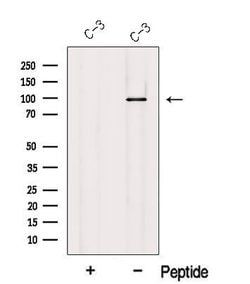
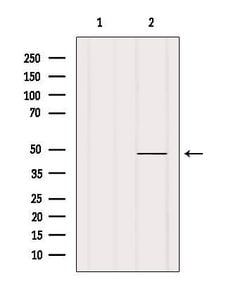
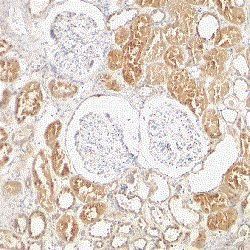
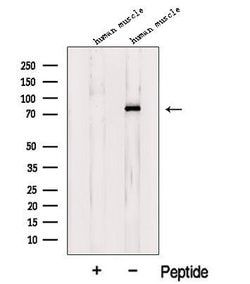
- Antibody detects endogenous levels of total ID3
- Members of the Id family of basic helix-loop-helix (bHLH) proteins include ID1, ID2, ID3 and ID4
- They are ubiquitously expressed and dimerize with members of the class A and B HLH proteins
- Due to the absence of the basic region, the resulting heterodimers cannot bind DNA
- The ID-type proteins thus appear to negatively regulate DNA binding of bHLH proteins
- Since ID1 inhibits DNA binding of E12 and Myo D, it apparently functions to inhibit muscle-specific gene expression
- Under conditions that facilitate muscle cell differentiation, the ID protein levels fall, allowing E12 and/or E47 to form heterodimers with Myo D and myogenin, which in turn activate myogenic differentiation
- It has been shown that expression of each of the ID proteins is strongly dependent on growth factor activation and that reduction of ID mRNA levels by antisense oligonucleotides leads to a delayed reentry of arrested cells into the cell cycle following growth factor stimulation.