EIF3M Polyclonal Antibody, Invitrogen™
Manufacturer: Thermo Scientific
Select a Size
| Pack Size | SKU | Availability | Price |
|---|---|---|---|
| Each of 1 | PIPA5100244-Each-of-1 | In Stock | ₹ 46,502.50 |
PIPA5100244 - Each of 1
In Stock
Quantity
1
Base Price: ₹ 46,502.50
GST (18%): ₹ 8,370.45
Total Price: ₹ 54,872.95
Antigen
EIF3M
Classification
Polyclonal
Conjugate
Unconjugated
Gene
EIF3M
Gene Alias
B5; B5 receptor; dendritic cell protein; dendritic cell protein GA17; eIF3m; Eukaryotic translation initiation factor 3 subunit M; eukaryotic translation initiation factor 3, subunit M; fetal lung protein B5; FLJ29030; GA17; HFLB5; hFL-B5; PCI domain containing 1 (herpesvirus entry mediator); PCI domain-containing protein 1; PCID1; PNAS-125; RGD1565840; Tango7; transport and golgi organization 7 homolog
Host Species
Rabbit
Purification Method
Affinity chromatography
Regulatory Status
RUO
Gene ID (Entrez)
10480, 295975, 98221
Content And Storage
-20°C
Form
Liquid
Applications
Western Blot
Concentration
1 mg/mL
Formulation
PBS with 50% glycerol and 0.02% sodium azide; pH 7.4
Gene Accession No.
Q7L2H7, Q99JX4
Gene Symbols
EIF3M
Immunogen
A synthesized peptide derived from human EIF3M(Accession Q7L2H7), corresponding to amino acid residues T338-T374.
Quantity
100 μL
Primary or Secondary
Primary
Target Species
Human, Mouse, Rat
Product Type
Antibody
Isotype
IgG
Related Products
Description
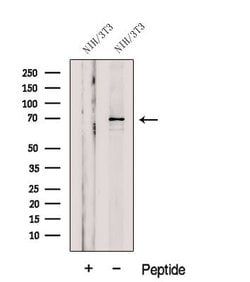
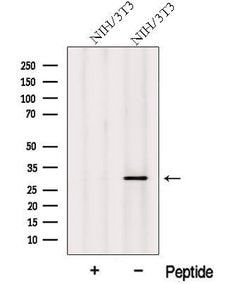
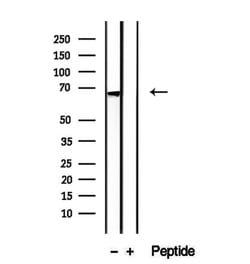
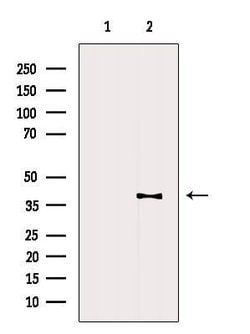
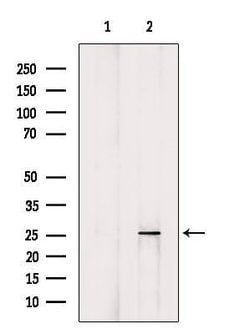
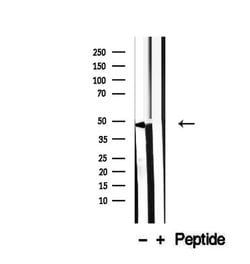
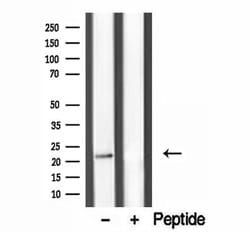
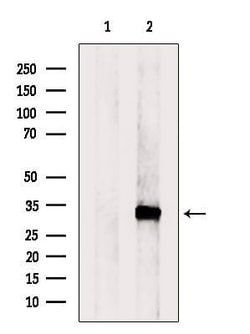
- Antibody detects endogenous levels of total EIF3M
- This gene encodes a protein that is part of the eurkaryotic translation initiation factor 3 complete (eIF-3) required for protein synthesis
- Elevated levels of the encoded protein are present in cancer cell lines
- Inactivation of the encoded protein has been shown to interfere with translation of herpes virus mRNAs by preventing the association of mRNAs with the ribosomes
- A pseudogene of this gene is located on the X chromosome.