POLR3D Polyclonal Antibody, Invitrogen™
Manufacturer: Thermo Scientific
Select a Size
| Pack Size | SKU | Availability | Price |
|---|---|---|---|
| Each of 1 | PIPA5101560-Each-of-1 | In Stock | ₹ 46,502.50 |
PIPA5101560 - Each of 1
In Stock
Quantity
1
Base Price: ₹ 46,502.50
GST (18%): ₹ 8,370.45
Total Price: ₹ 54,872.95
Antigen
POLR3D
Classification
Polyclonal
Conjugate
Unconjugated
Gene
Polr3d
Gene Alias
2810426M17Rik; 44kDa; AI326118; AW489084; BN51; BN51 (BHK21) temperature sensitivity complementing; Bn51t; DNA-directed RNA polymerase III 47 kDa polypeptide; DNA-directed RNA polymerase III subunit C4; DNA-directed RNA polymerase III subunit D; DNA-directed RNA polymerase III subunit RPC4; HOX1C; Polr3d; polymerase (RNA) III (DNA directed) polypeptide D; polymerase (RNA) III (DNA directed) polypeptide D, 44kDa; polymerase (RNA) III subunit D; Protein BN51; RNA polymerase III 47 kDa subunit; RNA polymerase III subunit C4; RNA polymerase III subunit D; RPC4; RPC53; RPC53 homolog; temperature sensitive complementation, cell cycle specific, tsBN51; TSBN51
Host Species
Rabbit
Purification Method
Affinity chromatography
Regulatory Status
RUO
Gene ID (Entrez)
661, 67065
Content And Storage
-20°C
Form
Liquid
Applications
Immunocytochemistry, Western Blot
Concentration
1 mg/mL
Formulation
PBS with 50% glycerol and 0.02% sodium azide; pH 7.4
Gene Accession No.
P05423, Q91WD1
Gene Symbols
Polr3d
Immunogen
A synthesized peptide derived from human POLR3D(Accession P05423), corresponding to amino acid residues T281-I331.
Quantity
100 μL
Primary or Secondary
Primary
Target Species
Human, Mouse
Product Type
Antibody
Isotype
IgG
Related Products

Description
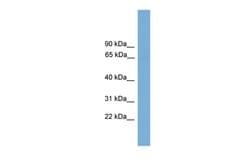
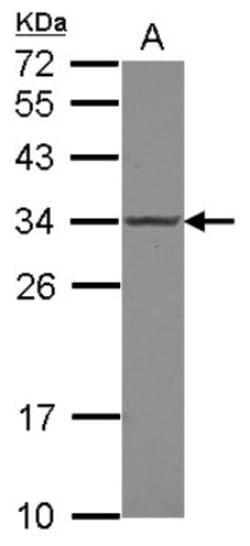
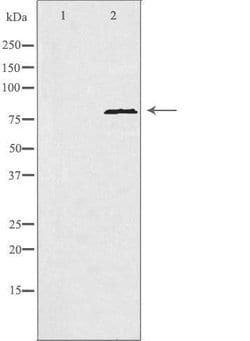
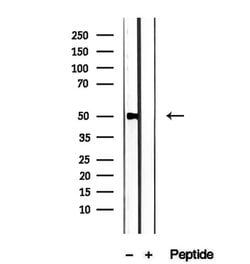
- Antibody detects endogenous levels of total RPC4
- This gene encodes a protein which interacts with the N-terminal region of BRCA1
- In addition to its ability to bind BRCA1 in vivo and in vitro, it shares homology with the 2 most conserved regions of BRCA1: the N-terminal RING motif and the C-terminal BRCT domain
- The RING motif is a cysteine-rich sequence found in a variety of proteins that regulate cell growth, including the products of tumor suppressor genes and dominant protooncogenes
- This protein also contains 3 tandem ankyrin repeats
- The BARD1/BRCA1 interaction is disrupted by tumorigenic amino acid substitutions in BRCA1, implying that the formation of a stable complex between these proteins may be an essential aspect of BRCA1 tumor suppression
- This protein may be the target of oncogenic mutations in breast or ovarian cancer.