S100A16 Polyclonal Antibody, Invitrogen™
Manufacturer: Thermo Scientific
Select a Size
| Pack Size | SKU | Availability | Price |
|---|---|---|---|
| Each of 1 | PIPA5101790-Each-of-1 | In Stock | ₹ 45,345.50 |
PIPA5101790 - Each of 1
In Stock
Quantity
1
Base Price: ₹ 45,345.50
GST (18%): ₹ 8,162.19
Total Price: ₹ 53,507.69
Antigen
S100A16
Classification
Polyclonal
Conjugate
Unconjugated
Gene
S100a16
Gene Alias
2300002L21Rik; AAG13; aging-associated gene 13 protein; aging-associated protein 13; AI325039; AI663996; DT1P1A7; MGC17528; protein S100-A16; Protein S100F; Protein S100-F; S100 calcium binding protein A16; S100 calcium-binding protein A16; S100A16; S100F
Host Species
Rabbit
Purification Method
Affinity chromatography
Regulatory Status
RUO
Gene ID (Entrez)
140576, 361991, 67860
Content And Storage
-20°C
Form
Liquid
Applications
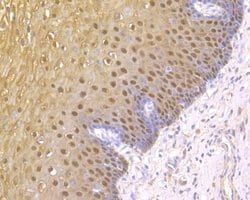
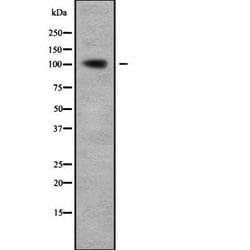
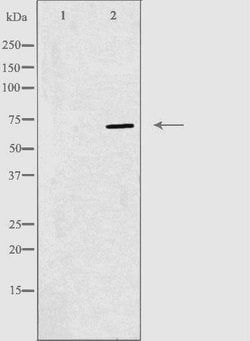
Immunocytochemistry, Immunohistochemistry (Paraffin), Western Blot
Concentration
1 mg/mL
Formulation
PBS with 50% glycerol and 0.02% sodium azide; pH 7.4
Gene Accession No.
Q96FQ6, Q9D708
Gene Symbols
S100a16
Immunogen
A synthesized peptide derived from human S100A16(Accession Q96FQ6), corresponding to amino acid residues N18-A68.
Quantity
100 μL
Primary or Secondary
Primary
Target Species
Human, Mouse, Rat
Product Type
Antibody
Isotype
IgG
Related Products


Description
- Antibody detects endogenous levels of total S100A16
- S100A16 (S100 Calcium Binding Protein A16) is a Protein Coding gene
- Diseases associated with S100A16 include Robinow Syndrome, Autosomal Recessive and Robinow Syndrome
- Gene Ontology (GO) annotations related to this gene include protein homodimerization activity
- Calcium-binding protein
- Binds one calcium ion per monomer
- Can promote differentiation of adipocytes (in vitro)
- Overexpression in preadipocytes increases their proliferation, enhances adipogenesis and reduces insulin-stimulated glucose uptake.