Prokineticin Receptor 1 Polyclonal Antibody, Invitrogen™
Manufacturer: Thermo Scientific
Select a Size
| Pack Size | SKU | Availability | Price |
|---|---|---|---|
| Each of 1 | PIPA5102241-Each-of-1 | In Stock | ₹ 46,502.50 |
PIPA5102241 - Each of 1
In Stock
Quantity
1
Base Price: ₹ 46,502.50
GST (18%): ₹ 8,370.45
Total Price: ₹ 54,872.95
Antigen
Prokineticin Receptor 1
Classification
Polyclonal
Conjugate
Unconjugated
Gene
PROKR1
Gene Alias
EG-VEGF receptor; EG-VEGFR1; G protein-coupled receptor 73; G protein-coupled receptor ZAQ; GPCR73A; GPR73; GPR73a; G-protein coupled receptor 73; G-protein coupled receptor ZAQ; PKR1; PK-R1; Prokineticin receptor 1; Prokr1; ZAQ
Host Species
Rabbit
Purification Method
Affinity chromatography
Regulatory Status
RUO
Gene ID (Entrez)
10887, 192648, 58182
Content And Storage
-20°C
Form
Liquid
Applications
Immunocytochemistry
Concentration
1 mg/mL
Formulation
PBS with 50% glycerol and 0.02% sodium azide; pH 7.4
Gene Accession No.
Q8R416, Q8TCW9, Q9JKL1
Gene Symbols
PROKR1
Immunogen
A synthesized peptide derived from human PROKR1(Accession Q8TCW9), corresponding to amino acid residues H26-C76.
Quantity
100 μL
Primary or Secondary
Primary
Target Species
Human, Mouse, Rat
Product Type
Antibody
Isotype
IgG
Related Products
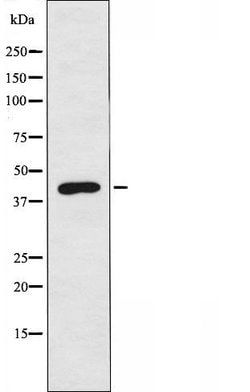
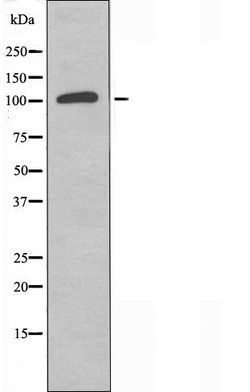
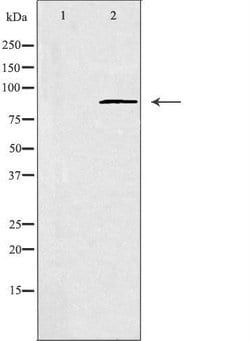
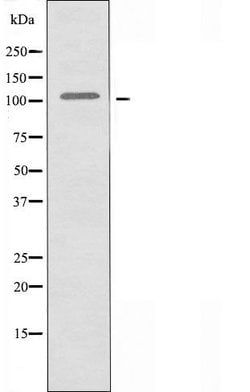
Description
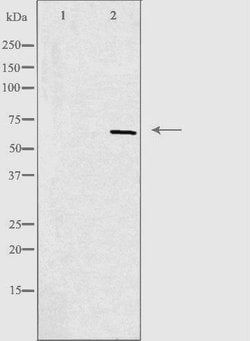
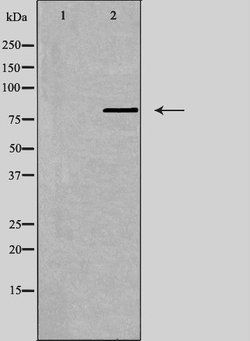
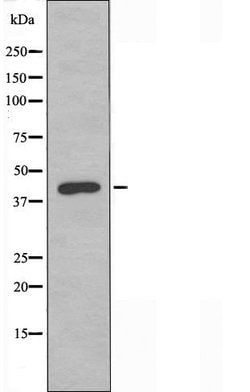
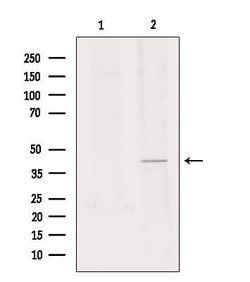
- Antibody detects endogenous levels of total PKR1
- GPR73A is a receptor for prokineticin 1
- It is a member of the GPCR family and is coupled to the G(q) subclass of heteromeric G proteins
- Activation of the receptor leads to mobilization of calcium, stimulation of phosphoinositide turnover and activation of p44/p42 mitogen-activated protein kinase
- GPR73A expression has been reported in adrenal, peripheral blood leukocytes, brain, colon, pancreas, prostate, rectum, salivary gland, small intestine, spleen, stomach, testis, and thyroid
- No human ESTs have been identified.