POLH Polyclonal Antibody, Invitrogen™
Manufacturer: Thermo Scientific
Select a Size
| Pack Size | SKU | Availability | Price |
|---|---|---|---|
| Each of 1 | PIPA5102492-Each-of-1 | In Stock | ₹ 46,502.50 |
PIPA5102492 - Each of 1
In Stock
Quantity
1
Base Price: ₹ 46,502.50
GST (18%): ₹ 8,370.45
Total Price: ₹ 54,872.95
Antigen
POLH
Classification
Polyclonal
Conjugate
Unconjugated
Gene
POLH
Gene Alias
DNA polymerase eta; DNA-directed DNA polymerase eta; FLJ16395; FLJ21978; Polh; polymerase (DNA directed), eta; polymerase (DNA directed), eta (RAD 30 related); polymerase (DNA) eta; RAD30; RAD30 homolog A; RAD30A; Xeroderma pigmentosum variant type protein; xeroderma pigmentosum variant type protein homolog; XP V; XPV; XP-V
Host Species
Rabbit
Purification Method
Affinity chromatography
Regulatory Status
RUO
Gene ID (Entrez)
316235, 5429, 80905
Content And Storage
-20°C
Form
Liquid
Applications
Immunohistochemistry (Paraffin), Western Blot
Concentration
1 mg/mL
Formulation
PBS with 50% glycerol and 0.02% sodium azide; pH 7.4
Gene Accession No.
Q9JJN0, Q9Y253
Gene Symbols
POLH
Immunogen
A synthesized peptide derived from human POLH(Accession Q9Y253), corresponding to amino acid residues Q541-T591.
Quantity
100 μL
Primary or Secondary
Primary
Target Species
Human, Mouse, Rat
Product Type
Antibody
Isotype
IgG
Related Products

Description
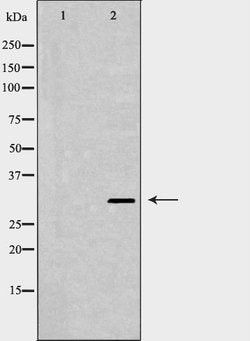
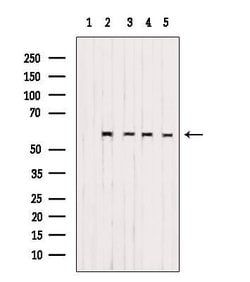
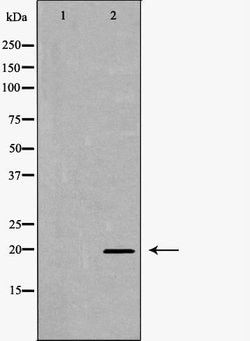
- Antibody detects endogenous levels of total POLH
- The XPA gene encodes a zinc metalloprotein that preferentially binds to DNA damaged by UV radiation and chemical carcinogens and is required for the incision step during nucleotide excision repair The XPB and XPD genes encode DNA helicases involved in several DNA metabolic pathways, including DNA repair and transcription, and the XPG gene product is an endonuclease that cuts on the 3' side of a DNA lesion during nucleotide excision repair
- Molecular defects in the XP variant (POL H) group maintain normal excision repair, yet they result in a substantial reduction in the ability to synthesize intact daughter DNA strands during DNA replication following DNA damage.